Your AC Compressor Unit: Repair or Replace?

Let’s be honest: hearing that your air conditioner needs a major repair is stressful, especially when it involves the compressor. As the most vital and expensive part of your AC system, a failing compressor forces a tough financial decision: should you repair it or replace the whole thing? Making the wrong choice can cost you thousands in the long run. This guide is designed to give you clarity. We’ll break down the signs of a failing compressor, explain the average lifespan, and even give you a simple rule to help you decide. Understanding what’s happening inside your outdoor compressor unit empowers you to make a smart, budget-friendly choice for your home.
Key Takeaways
- Your Compressor is the Heart of Your AC System: It performs the essential job of circulating refrigerant to cool your home. A healthy compressor means a healthy AC, so understanding its function is key to maintaining your comfort.
- Listen for Your System's Warning Signs: Don't ignore symptoms like warm air from vents, strange banging noises, or frequently tripped breakers. These are clear indicators of compressor trouble, and addressing them early can prevent a complete system failure.
- Make a Confident Repair-or-Replace Decision: Use the simple $5,000 rule to guide your choice. Multiply the repair quote by your AC's age—if the total exceeds $5,000, investing in a new, more efficient system is often the smarter long-term financial move.
What Is an AC Compressor and How Does It Work?
Ever wondered what makes your air conditioner tick on a sweltering Florida day? While your AC system has many parts working in harmony, one component does the real heavy lifting to move heat from inside your home to the outside. That powerhouse is the AC compressor. Understanding what it is and what it does can help you spot problems early and know when to call for help. It’s the key to keeping your home cool and comfortable year-round.
Your AC's Engine
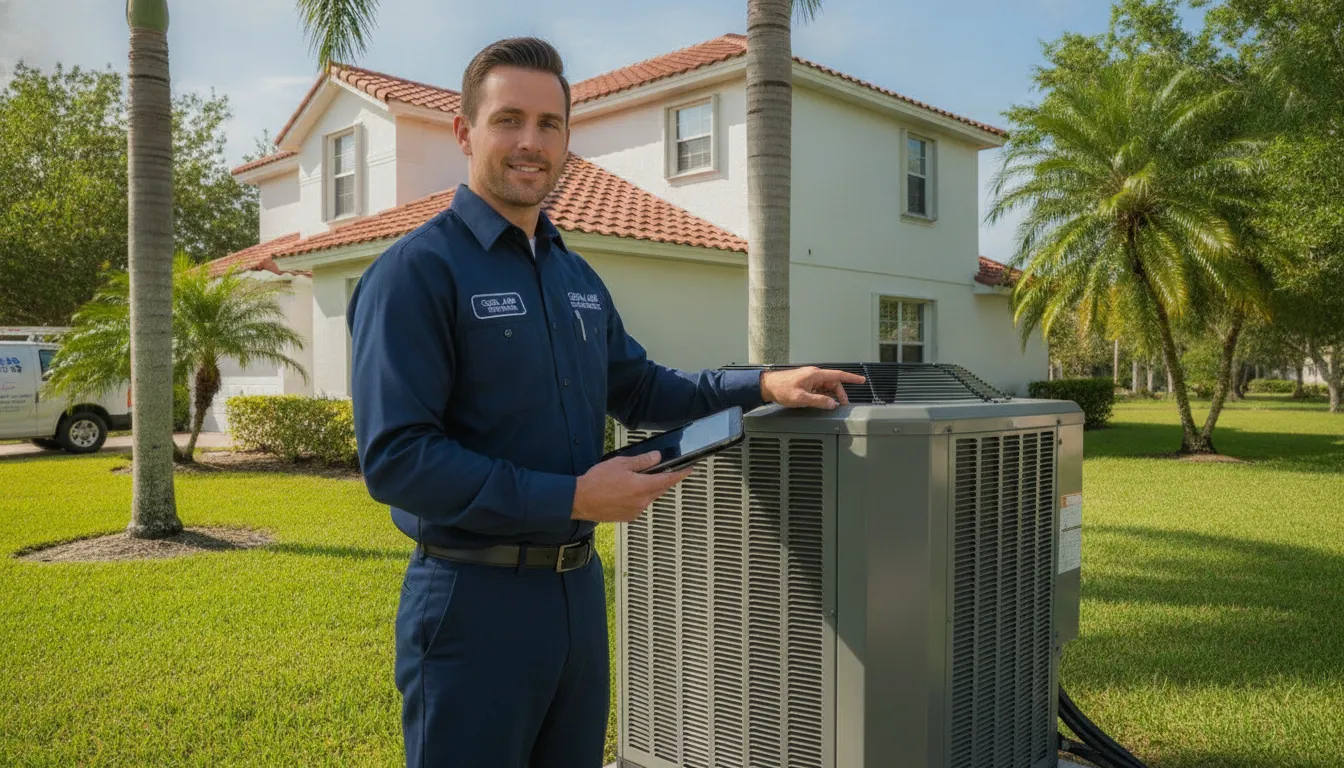
Think of your AC compressor as the engine or the heart of your entire cooling system. It’s located inside the large metal unit that sits outside your house. Just like your car’s engine provides the power to get you moving, the compressor provides the force needed to circulate refrigerant throughout the AC system. This refrigerant is the special substance that absorbs heat from your indoor air. Without a functioning compressor, the refrigerant wouldn't move, and your air conditioner would simply be a very large, ineffective fan. This makes the compressor one of the most important—and expensive—parts of your AC.
How It Cools Your Home
So, how does this process actually cool your home? The compressor receives refrigerant as a cool, low-pressure gas. It then squeezes—or compresses—this gas, which dramatically increases its pressure and temperature. This hot, high-pressure gas then flows to the condenser coils (the metal fins on your outdoor unit) where a fan blows air across them, releasing the heat into the outdoors. As the refrigerant sheds its heat, it transforms into a high-pressure liquid. This liquid then travels to your indoor unit, where it expands and evaporates, absorbing heat from your home’s air in the process. This cycle is what makes professional air conditioning maintenance so crucial for keeping every part working efficiently.
Compressor vs. Condenser: What's the Difference?
It’s common to hear people use the terms “compressor” and “condenser” as if they’re the same thing, but they refer to two different parts of your system. The compressor is a specific component inside the outdoor unit that pressurizes the refrigerant. The condenser unit, on the other hand, is the name for the entire outdoor unit—the big box that houses the compressor, condenser coils, a fan, and other parts. A simple way to remember it is that the compressor is the engine, while the condenser unit is the whole car. Knowing this little detail can help you more accurately describe a problem when you call for an air conditioning repair.
Know the Different Types of AC Compressors
When you start looking into AC systems, you’ll quickly find that not all compressors are built the same. Think of it like choosing an engine for a car—different types offer different balances of power, efficiency, and quietness. Understanding the basics of what’s inside your outdoor unit can help you make a smarter decision when it’s time for a repair or a full system upgrade. Each type has its own way of getting the job done, and knowing the difference can impact everything from your energy bills to the noise level in your backyard. Let’s walk through the most common types you’ll encounter.
Reciprocating
Reciprocating compressors are a classic, workhorse design. They operate using a piston to compress the refrigerant, much like the pistons in a car's engine. This mechanism makes them quite effective, especially in smaller AC systems. They’re known for being able to handle different cooling loads well. The main trade-off is that with more moving parts comes the potential for more wear and tear over time. If you have an older system, there's a good chance it has a reciprocating compressor. While they are reliable, their design can sometimes lead to more frequent needs for air conditioning repair as they age.
Scroll
Scroll compressors are a favorite in modern residential air conditioners, and for good reason. Instead of a piston, they use two spiral-shaped pieces, called scrolls, to compress the refrigerant. One scroll stays stationary while the other orbits around it, squeezing the refrigerant into smaller and smaller areas. This design has far fewer moving parts than a reciprocating compressor, which means less friction, less wear, and a longer lifespan. A huge plus for homeowners is that they are significantly quieter and more efficient. If you value a peaceful backyard and lower energy bills, a system with a scroll compressor is an excellent choice.
Rotary
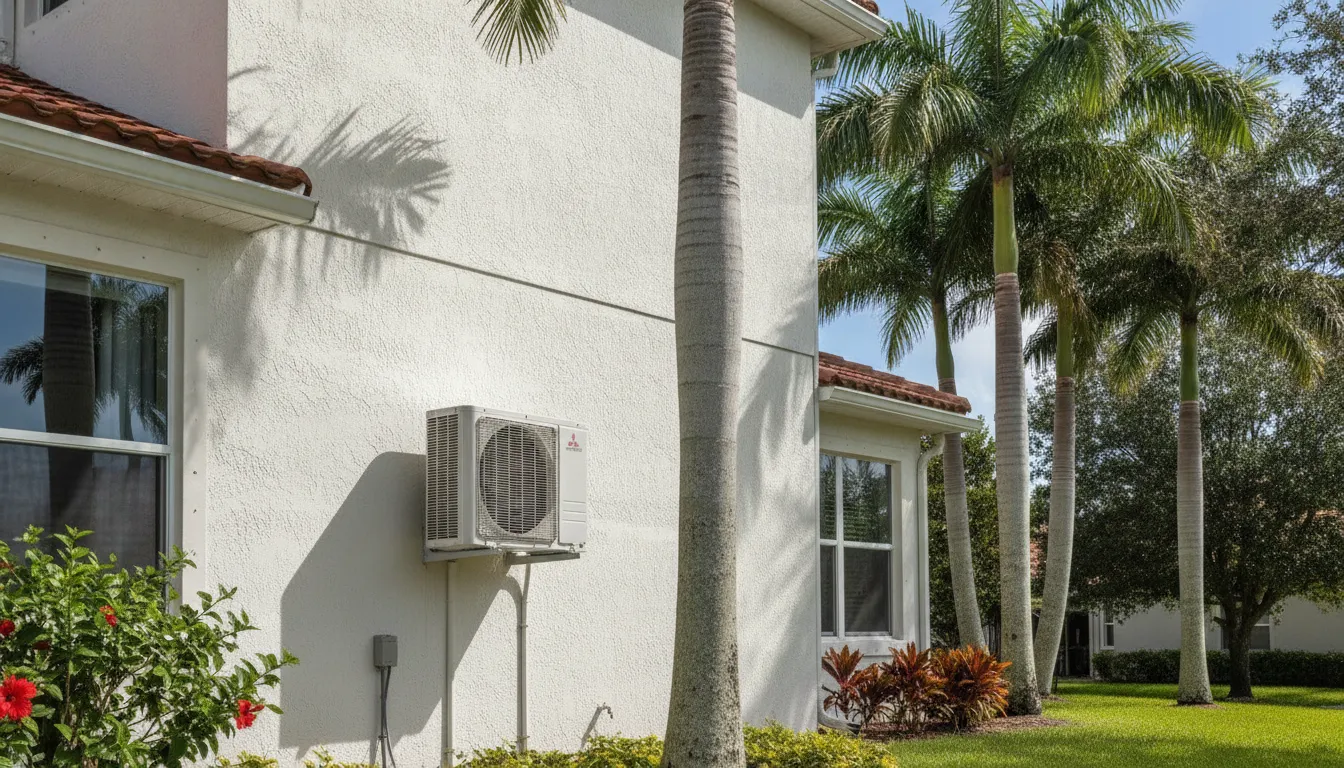
Rotary compressors are another efficient and quiet option. They use a series of rollers or blades spinning inside a cylinder to compress the refrigerant gas. This rotating motion allows for a very smooth and continuous compression cycle. Because of their compact size and reliability, you’ll often find them in smaller applications like ductless mini-split systems or window units. They are known for being durable and providing consistent cooling without a lot of noise, making them a solid, dependable choice for various cooling needs around your home.
Variable Speed vs. Single Speed
This is less about the mechanical design and more about how the compressor operates. A traditional single-speed compressor is either on or off—no in-between. It runs at full blast to cool your home and then shuts off completely. A variable-speed compressor, on the other hand, works like a dimmer switch. It can adjust its speed up or down to precisely match your home’s cooling needs at any given moment. This means it runs longer but at much lower speeds, leading to incredible energy efficiency and more even temperatures. While the upfront cost for a new air conditioning installation with a variable-speed unit is higher, the long-term energy savings are often significant.
5 Signs Your AC Compressor Is Failing
Your AC compressor is the powerhouse of your cooling system, working hard day in and day out to keep your Florida home comfortable. But like any hard-working component, it can wear out over time. Catching the warning signs early can be the difference between a simple fix and a full system replacement. If you notice your AC acting up, it’s best not to ignore it. Paying attention to how your system runs can save you a lot of sweat and money down the road. Here are five common signs that your AC compressor might be on its way out.
Weak or Warm Airflow
One of the most obvious signs of trouble is when your AC just isn't cooling like it used to. If you feel weak or warm air coming from your vents even when the system is running, your compressor may be struggling to circulate refrigerant properly. A good way to check is to walk outside and feel the air coming from your outdoor unit. On a hot day, it should be blowing out hot air as it releases heat from inside your home. If that air feels cool or lukewarm, it’s a strong indicator that the compressor isn't doing its job. This isn't something that will fix itself; it's time to call for a professional air conditioning repair to diagnose the problem.
Strange Noises
Your air conditioner should operate with a consistent, low hum. If you start hearing loud or unusual sounds, it’s your system’s way of crying for help. Noises like banging, clattering, or screeching often point to a problem inside the compressor, such as a loose part or a failing motor bearing. You might also hear a distinct hissing sound, which could signal a refrigerant leak. Ignoring these sounds is a gamble, as a failing component can break loose and cause more extensive damage to the rest of your system. It’s always best to have a technician investigate any strange noises before a minor issue becomes a major headache.
Frequent Circuit Breaker Trips
Does your AC keep tripping the circuit breaker? While it might seem like a minor annoyance you can fix with a quick flip of a switch, it’s actually a serious warning sign. Your circuit breaker is a safety device designed to cut power when a circuit is overloaded. A failing compressor often draws more electricity than the circuit can handle, causing it to trip. Continuously resetting it without addressing the root cause is not only ineffective but also dangerous. It can lead to electrical damage or even a fire. If your AC is causing frequent trips, you need an emergency service call to safely identify and fix the underlying electrical issue.
Higher-Than-Normal Energy Bills
A sudden, unexplained spike in your electricity bill can be a subtle clue that your compressor is on its last legs. As the compressor ages and wears down, it loses efficiency. This means it has to run longer and work harder to cool your home to the temperature set on your thermostat, consuming a lot more energy in the process. While other factors can affect your energy usage, a struggling compressor is a common culprit. If your bills are creeping up without a clear reason, it might be more cost-effective in the long run to consider a full AC replacement with a newer, more energy-efficient model.
Leaks Near Your Outdoor Unit
Finding any kind of fluid pooling around your outdoor condenser unit is a red flag that needs immediate attention. This is often a sign of a refrigerant leak. Refrigerant is the essential substance that your compressor circulates to cool your home, and a leak means the system can't function correctly. Not only is this bad for your AC’s health, but refrigerant can also be harmful to you and the environment. Don't try to clean it up yourself or ignore it. A leak is a clear sign of a significant problem, often stemming from the compressor itself, and requires a professional AC repair service to handle safely and effectively.
How Long Does an AC Compressor Last?
When your AC starts acting up, one of the first questions that comes to mind is, "How much longer will this thing last?" The compressor is the heart of your air conditioning system, and its lifespan is a major factor in deciding whether to repair or replace it. Understanding the typical lifespan and what you can do to extend it will help you make a smart, confident decision for your home.
The Average Compressor Lifespan
So, what’s the magic number? An HVAC compressor typically has a lifespan of 10 to 15 years. With consistent, proper care, you can often get it to last closer to that 15-year mark, sometimes even longer. This is a pretty wide range, and for good reason. Just like a car, how you treat your AC unit and the conditions it operates in play a huge role in its longevity. Knowing this average helps you gauge where your system is in its life cycle and plan for the future without any last-minute surprises.
Factors That Shorten or Extend Its Life
Several key factors can influence the lifespan of your AC compressor. Here in Florida, our units work hard year-round, and that constant use naturally contributes to wear and tear. The quality of the initial installation is also critical—a poorly installed unit will struggle from day one. Beyond that, simple things like keeping the outdoor unit clear of debris, changing your air filters regularly, and addressing small issues before they become big ones can make a world of difference in helping your compressor reach its full potential.
The Role of Regular Maintenance
If you want to get the most out of your AC compressor, regular maintenance is non-negotiable. Think of it like an annual check-up for your home’s cooling system. During a professional tune-up, a technician can catch and fix minor issues, clean essential components, and ensure the entire system is running efficiently. This proactive approach not only helps prevent unexpected breakdowns on a sweltering summer day but is also the single most effective way to extend the life of your compressor. An annual air conditioning maintenance plan is a small investment that pays off in longevity and peace of mind.
Common Compressor Care Myths
Let's clear up a few common compressed air misconceptions that can lead to improper care and a shorter lifespan for your unit. One popular myth is that "bigger is better" when it comes to AC units. In reality, an oversized unit will cool your home too quickly and shut off, a process called short-cycling. This constant starting and stopping puts immense strain on the compressor, leading to premature failure. Another is that topping off refrigerant will fix any problem. If there's a leak, adding more refrigerant is just a temporary fix that doesn't address the root cause. Sticking to the facts and relying on professional advice is the best way to care for your system.
Should You Repair or Replace Your Compressor?
Deciding whether to repair a failing AC compressor or replace the entire unit is a major financial decision, and honestly, it can be stressful. The compressor is the heart of your air conditioner, and when it has problems, you have to weigh the immediate cost of a repair against the long-term investment of a new system. There isn’t a single right answer for everyone, but there are a few key factors you can consider to make the most sensible choice for your home and your budget. By looking at the age of your system, the cost of the repair, and potential future energy savings, you can approach this decision with confidence.
Use the $5,000 Rule to Decide
A great starting point for this decision is a simple guideline called the $5,000 Rule. Here’s how it works: multiply the age of your AC unit by the estimated cost of the repair. If the total is more than $5,000, it’s generally more economical to replace the unit. If the number is less than $5,000, a repair is likely your best bet. For example, if your 8-year-old system needs a $400 repair, the total is $3,200—well under the $5,000 mark, suggesting a repair is reasonable. However, if that same 8-year-old unit needs a $700 repair, the total comes to $5,600, indicating that a full replacement might be the wiser long-term investment.
The Cost of Repairing vs. Replacing
Beyond the $5,000 rule, it helps to look at the raw numbers. The average cost to repair an AC compressor typically falls between $800 and $2,300. If your system is still relatively new (less than seven years old) and the repair quote is on the lower end of that spectrum, fixing it usually makes sense. However, if your unit is over 10 years old or the repair cost is more than half the price of a new system, replacement becomes a much more attractive option. Pouring a significant amount of money into an aging unit is often just a temporary fix before another component fails.
Factoring in Future Energy Savings
An often-overlooked part of the equation is how a new unit can impact your monthly utility bills. Modern air conditioners are significantly more energy-efficient than models from a decade ago. If you plan on staying in your home for the long haul, investing in a new system with a high-efficiency compressor, like a variable-speed model, can lead to substantial savings over time. While the upfront cost is higher, the reduced energy consumption can offset it. This is especially true here in Florida, where our ACs work overtime for most of the year. Thinking about future energy savings can help you see a replacement as a smart investment rather than just an expense.
When to Call for a Professional, Honest Assessment
Ultimately, this isn't a decision you should make alone. Air conditioning systems are complex and use chemical refrigerants that require certified professionals to handle safely and legally. A trusted technician can give you an accurate diagnosis and a clear, honest quote for both repair and replacement options. At 5 Star Air, we believe in giving you all the information without any sales pressure. If your compressor is on its last legs, especially in an older unit, we’ll walk you through the pros and cons so you can make the best choice for your family. When you’re ready for an honest assessment, our team is here to help.
Frequently Asked Questions
Why is replacing just the compressor so expensive? Replacing a compressor is a complex, labor-intensive job that goes far beyond just swapping out a part. It requires a certified technician to safely recover the system's refrigerant, cut the old compressor out, weld the new one into place, and then recharge the system with the precise amount of refrigerant. The cost reflects the price of the component itself, the specialized tools needed, and the hours of expert labor required to do the job correctly and safely.
Can I prevent my AC compressor from failing? While you can't stop normal wear and tear, you can absolutely take steps to help your compressor live a long, healthy life. The single best thing you can do is schedule regular professional maintenance. A technician can catch small issues before they become big problems. On your own, you can help by regularly changing your indoor air filter and keeping the area around your outdoor unit clear of leaves, grass clippings, and anything else that might block airflow.
If my compressor fails, do I have to replace the entire outdoor unit? This is a great question and depends heavily on the age of your system. While it's sometimes technically possible to replace only the compressor, it's often not the best long-term solution for an older unit. A new compressor in an old system can be inefficient and may not be covered by a warranty. For systems over 10 years old, it's usually more cost-effective to replace the entire outdoor condenser unit to ensure all the parts are matched for optimal performance and efficiency.
What's the most common reason compressors fail in Florida? Here in Florida, our ACs work incredibly hard. The constant demand from our long, hot summers is the primary factor, leading to significant wear over time. Other common culprits include power surges from our frequent thunderstorms, which can damage the electrical components, and corrosion from the salty, humid air, especially for homes near the coast. This is why routine inspections are so important to catch these issues early.
Is a loud noise from my outdoor unit always a compressor problem? Not always, but it's definitely a sign that something needs attention. While a failing compressor can cause loud banging or screeching, those noises could also come from a worn-out fan motor or loose hardware. A buzzing or humming sound might point to an electrical issue. Because different sounds indicate different problems, it's always best to have a professional diagnose the noise rather than assuming the worst.