HVAC System Replacement Parts: A Homeowner's Guide
Think of your HVAC system as a team, where every player has a critical role in keeping your home comfortable. When the team isn’t performing well, it’s usually because one player is struggling. Instead of replacing the whole team, you just need to swap out the underperforming player. This guide is your playbook for understanding each position, from the air filter acting as the first line of defense to the compressor doing the heavy lifting. Getting familiar with these key hvac system replacement parts will help you better diagnose issues, prevent future breakdowns, and know when it’s time to call in a professional coach for a more complex problem, ensuring your system runs efficiently for years.
Key Takeaways
- Proactive care is key to longevity: The simplest tasks have the biggest impact. Changing your air filter regularly and scheduling an annual professional inspection can prevent strain on your system, helping individual parts last much longer and avoiding costly emergency calls.
- Know when to repair versus replace: Before approving an expensive fix, use the "$5,000 rule" by multiplying the repair cost by your unit's age in years. If the total is over $5,000, investing in a new system is often the more cost-effective choice, especially for units over ten years old.
- Leave complex repairs to the professionals: While DIY is tempting for saving money, HVAC systems involve high-voltage electricity and chemical refrigerants that pose serious safety risks. A licensed technician can accurately diagnose the root problem, install the correct part safely, and protect your system's warranty.
What Are HVAC Replacement Parts?
Think of your HVAC system as a team where every player has a specific job. This network of parts works together to keep your home comfortable by controlling the temperature, humidity, and air quality. When one of these parts stops working correctly, you don't always need to replace the entire system. Often, a simple part replacement is all it takes to get things running smoothly again. These individual components are what we call HVAC replacement parts.
From the tiny capacitor that gives the motor a jolt of energy to the large compressor that circulates refrigerant, each piece is crucial. Understanding the basics of your system can help you feel more confident when you need to call for a repair. Knowing what a capacitor does or why a clean air filter matters can make a huge difference in how you maintain your system and the decisions you make about its care. When a part fails, a technician can swap out the old, broken piece for a new one, extending the life of your unit and restoring your home's comfort. If you suspect a part has failed, a professional air conditioning repair service can diagnose the issue and find the right solution.
A Quick Look at Essential Components
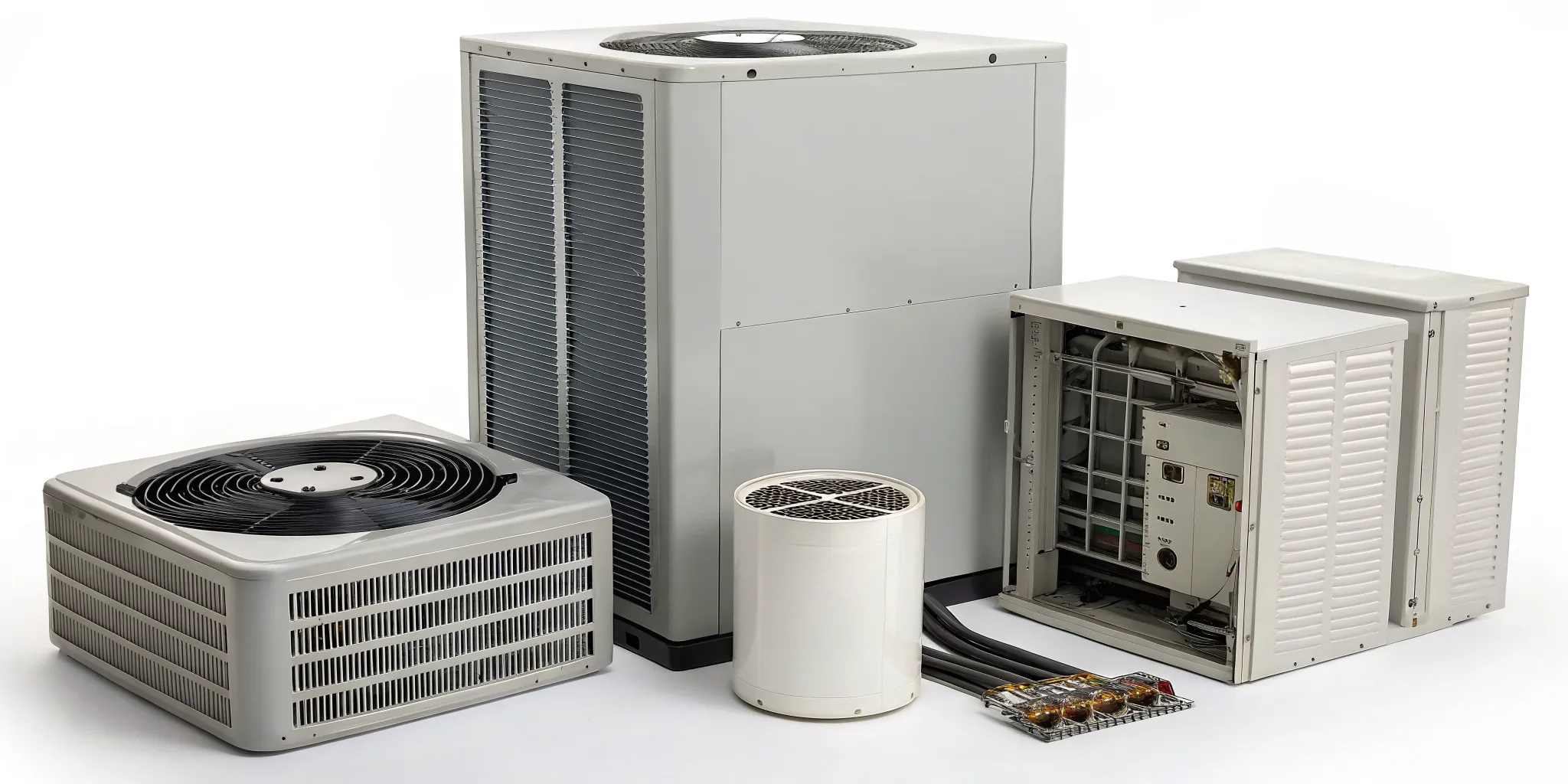
Your HVAC system has several key components that work in a continuous cycle to cool your home. It all starts with the thermostat, which acts as the brain, telling the system when to turn on and off. The compressor and condenser coils work outside to release heat, while the evaporator coil inside absorbs heat from your home's air. The air handler and blower fan are responsible for pushing the cool air through your ductwork and into your living spaces. Along the way, air filters trap dust and debris, keeping your air clean. Each part is essential for the system to function efficiently.
Knowing When It's Time for a Replacement
Deciding whether to repair a single part or replace the entire unit can be tricky. A helpful guideline is the "$5,000 rule." To use it, multiply the age of your HVAC unit in years by the estimated cost of the repair. If the total is more than $5,000, it’s usually more cost-effective to invest in a new system. Another major factor is age. Most HVAC systems have a lifespan of 10 to 15 years. If your unit is approaching or has passed that age, a major repair might just be a temporary fix before another part fails. In that case, a full system replacement is often the smarter long-term investment.
Common HVAC Parts and What They Do
Your HVAC system might seem like a mysterious metal box, but it’s really just a team of parts working together to keep you comfortable. You don’t need to be a certified technician to understand the basics, and knowing a little about the key players can make a huge difference when something goes wrong. When you can spot the signs of a problem or understand what your service pro is explaining, you feel more in control of your home and your budget. Think of it like knowing the difference between your car’s engine and its tires; each part has a specific job, and if one fails, the whole system is affected.
From the simple filter you can change yourself to the complex compressor humming away outside, every component is essential for efficient cooling and heating. Getting familiar with these parts helps you communicate more effectively with technicians and makes you a more informed homeowner. It can also help you catch small issues before they turn into major, expensive breakdowns, especially during those sweltering Florida summers when you rely on your AC the most. Let’s walk through some of the most common HVAC parts, what they do, and why they matter. This will help you better understand your system and know what to look for when things aren't working quite right.
Air Filters: Your System's First Line of Defense
The air filter is your HVAC system’s unsung hero. Its job is simple but critical: it catches dust, pollen, pet dander, and other airborne particles before they can enter your HVAC unit. This not only protects the sensitive internal components from getting clogged with debris but also directly impacts your home’s indoor air quality. A dirty, clogged filter forces the system to work much harder to pull in air, which can lead to reduced efficiency, higher energy bills, and even system failure. Swapping out your air filter is one of the easiest and most important maintenance tasks you can do yourself to keep your system running smoothly.
Capacitors: The Spark That Starts It All
If your AC unit hums but won’t kick on, a bad capacitor could be the culprit. A capacitor is like a small, temporary battery that gives the motors in your HVAC system the jolt of energy they need to start and run. Because they work so hard, especially during our long, hot Florida summers, capacitors are one of the most common parts to fail. While it’s a relatively inexpensive part, replacing a capacitor involves working with high-voltage electricity and should always be handled by a professional. If you suspect an issue, it’s best to schedule an air conditioning repair to get it checked out safely.
Thermostats: The Brains of the Operation
The thermostat is the command center for your entire HVAC system. It constantly reads the temperature in your home and, based on your settings, tells the system when to turn on and off. If the thermostat is malfunctioning, it can cause all sorts of problems, from your AC running nonstop to not turning on at all. Modern smart thermostats have taken this role even further, allowing you to control your home’s climate from your phone and create schedules that save energy. A properly functioning thermostat is key to both your comfort and your energy bills.
Blower Motors: The Heart of Your Airflow
The blower motor is the powerful fan that pushes conditioned air from your HVAC unit through the ductwork and into your home. You can think of it as the heart of your system, responsible for circulating air to every room. If the unit outside is running but you feel little to no air coming from your vents, the blower motor might be the problem. You might also hear unusual noises, like squealing or banging, if the motor is failing. Since it’s a crucial and complex component, any issues with the blower motor require a professional diagnosis and repair.
Compressors & Heat Exchangers: The Heavy Lifters
The compressor and heat exchanger are the workhorses of your air conditioner. The compressor is the engine of the outdoor unit, responsible for pressurizing and circulating refrigerant to move heat out of your home. The heat exchanger is where the actual transfer of heat happens. These are major components, and a problem with either one is a serious issue. A failing compressor, in particular, is one of the most expensive repairs an AC system can have. Often, if a major part like this fails on an older unit, it makes more sense to consider a full air conditioning replacement.
Signs You Need a Replacement Part
Your HVAC system rarely fails without warning. It usually sends out signals, some obvious and others more subtle, that a part is wearing out. Learning to recognize these signs can help you address small issues before they turn into major, costly breakdowns, especially during a Florida heatwave. Paying attention to your system's daily performance is the first step in catching problems early. The clues generally fall into two categories: immediate warning signs from the unit itself and long-term indicators related to its age and overall efficiency. Knowing what to look and listen for can save you a lot of time, money, and discomfort down the road.
Warning Signs from Your System
Some of the most common signs of a failing part are the ones you can see, hear, or feel. If your HVAC system starts making unusual noises like squealing, grinding, or rattling, it’s often a mechanical cry for help from worn-out or broken components. Similarly, discovering water pooling around your indoor or outdoor unit is a clear red flag, often pointing to a clogged drain line. You might also notice a change in performance. If the air coming from your vents feels weak or isn't as cool as it used to be, it could be a sign of anything from a dirty air filter restricting airflow to a more serious internal problem. When you notice these issues, it's wise to schedule a professional air conditioning repair to diagnose the source.
Clues from Age and Wear
Other signs that you need a replacement part are less about sudden changes and more about gradual decline. The age of your system is a major factor; most HVAC units last between 10 and 15 years. As your system approaches and surpasses this age range, parts are more likely to fail from simple wear and tear. You might also notice your energy bills slowly climbing higher each month, which indicates the system is losing efficiency and working harder to cool your home. If you find yourself calling for repairs frequently, it’s another strong clue. While one or two repairs are normal, multiple service calls over a short period suggest that replacing the entire unit might be a more cost-effective solution than continuing to fix aging parts.
Which Brands Are Most Reliable?
When a part in your HVAC system fails, you want to replace it with something that will last. But with so many brands on the market, how do you know which ones to trust? It’s not always about picking the most expensive option. Reliability comes down to a combination of quality manufacturing, proven performance, and the right fit for your specific unit. Choosing a dependable brand for your replacement parts is a key step in ensuring your system runs smoothly for years to come. Let's look at what makes a brand stand out and which names professionals often turn to for quality and durability.
Top-Rated HVAC Part Manufacturers
Just like with cars, some brands are simply known for making better parts. In the HVAC world, technicians often rely on manufacturers with a long history of producing durable and effective components. Brands like Goodman, Amana, Clean Comfort, and DiversiTech have built a reputation for quality. At 5 Star Air, we believe that a repair is only as good as the part we use, which is why we source high-quality components for every air conditioning repair we perform. While these brands are excellent, the most important factor is choosing a part that is fully compatible with your specific HVAC model to ensure it functions perfectly.
What to Look for in a Quality Brand
A recognizable brand name is a good start, but a truly quality part has a few other hallmarks. Look for brands with a strong, verifiable reputation for reliability and performance. Another key factor is energy efficiency. Using a high-quality replacement part helps your system maintain its SEER (Seasonal Energy Efficiency Ratio) rating, which means it runs more efficiently and saves you money on energy bills. Investing in a better part now can prevent future breakdowns and extend the life of your entire system. Regular air conditioning maintenance that includes quality replacement parts is the best way to keep your AC running smoothly all year.
How Much Do HVAC Replacement Parts Cost?
Let’s talk about one of the biggest questions on every homeowner's mind when their AC acts up: the cost. The price of HVAC replacement parts can vary widely, so it’s helpful to have a general idea of what to expect. While a simple fix might only set you back a couple of hundred dollars, a major component failure can be much more significant.
Understanding the costs involved helps you make a clear-headed decision without the stress of the unknown. Below, we’ll break down average costs, what influences the final price tag, and how you can be a savvy homeowner when it comes to repairs.
A Look at Average Costs
The cost of an individual HVAC part can range from under $50 for something simple like a capacitor to over $2,000 for a major component like a compressor. The final bill will depend entirely on what needs fixing. For context, a full system replacement for a standard-sized home can run anywhere from $5,000 to $12,000. If your repair estimate starts creeping up toward that number, it might be time to weigh the pros and cons of repair versus replacement. Because these costs can be unexpected, it's good to know that flexible financing options are often available to help manage the expense without breaking your budget.
What Affects the Price?
Several factors determine the price of an HVAC part and its installation. The most obvious is the part itself; a small, common component will always be cheaper than a large, complex one. The brand of your HVAC unit also plays a role, as some manufacturers’ parts are more expensive or harder to source than others. The age of your system is another critical factor. Most HVAC systems last between 10 and 15 years. If yours is approaching or past that age, parts may be harder to find, and it might be less efficient, costing you more on utility bills. When you call for a professional air conditioning repair, the technician can diagnose the issue and give you a clear, upfront price for both the part and the labor.
How to Find a Good Deal
Getting a good deal on HVAC parts isn’t just about finding the lowest price; it’s about getting long-term value. Before you buy anything, check if your system or the faulty part is still under warranty, as this could save you a significant amount of money. While it might be tempting to search for parts online, you risk buying the wrong component or a low-quality one that will fail again soon. The best way to save money over the life of your system is to prevent problems from happening in the first place. Investing in a regular air conditioning maintenance plan helps keep all your system’s parts in top condition, extending their lifespan and catching small issues before they become expensive emergencies.
How to Find the Right Replacement Part
Finding the exact HVAC part you need can feel like a scavenger hunt, but getting it right is essential for a successful repair. Installing the wrong component can lead to bigger problems, from poor performance to serious damage to your system. The key is to be methodical. Think of yourself as a detective: you need the right clues to solve the case. Your system’s manual, model number, and a little online research are your best tools.
But it's also important to know when to call for backup. While some parts are straightforward to identify and replace, others are symptoms of a deeper issue that only a trained eye can spot. Before you start ordering parts, take a moment to gather your information. This simple step will save you from the headache of return shipping and the frustration of a repair job gone wrong. It’s the difference between a quick fix and a recurring problem that costs you more in the long run. If you ever feel out of your depth, remember that a professional air conditioning repair is always the safest bet, ensuring the job is done correctly and your system is protected. We'll walk you through how to use your resources and when to make that call.
Using Your Manual and Model Number
Your first stop should always be your HVAC system’s owner's manual. It’s the official guide to your unit and contains a wealth of information, including diagrams and part lists. If you’ve misplaced the physical copy, a quick online search of your unit’s brand and model number will usually bring up a digital version. The model number is the most critical piece of information you have. You can typically find it on a metal plate or sticker on the side of both your indoor and outdoor units. Once you have the model number, you can pinpoint the exact part number you need, which eliminates any guesswork and ensures you get a perfect match for your system.
Helpful Online Resources
With a part number in hand, you can take your search online. Manufacturer websites and authorized parts distributors are the most reliable sources. Many of these sites allow you to search and sort products by brand or part number, making it easy to find what you’re looking for. While it might be tempting to buy from the cheapest online seller, stick to reputable vendors to avoid counterfeit or low-quality parts. Online forums can also be a source of information, but always verify what you read with your owner’s manual or a trusted professional. What worked for someone else’s system might not be right for yours.
Why a Professional Inspection Is Key
If you feel the slightest bit unsure about diagnosing the problem or finding the right part, it’s time to call a professional. What looks like a simple capacitor failure could actually be a symptom of a struggling compressor. A licensed technician can perform a full diagnostic to uncover the root cause of the issue, not just the immediate symptom. This approach saves you from replacing a part that’s only going to fail again. If you aren't comfortable working with your HVAC system, it's always best to call a licensed HVAC technician. Our team at 5 Star Air can ensure the problem is fixed correctly the first time, giving you peace of mind and a cool, comfortable home.
How to Make Your HVAC Parts Last Longer
You want your air conditioner to work hard for you, especially during a hot Florida summer. The good news is that you have a lot of control over how long your system and its parts last. Extending the life of your HVAC components doesn't require any secret tricks, just a little proactive care. By focusing on consistent maintenance, ensuring the system was installed correctly from the start, and knowing when to call for professional help, you can prevent many common problems and keep your home comfortable for years to come. A little attention now can save you from major headaches and expensive repairs later.
The Importance of Regular Maintenance
The single best thing you can do for your HVAC system is to keep up with regular maintenance. One of the simplest tasks you can handle yourself is changing the air filter. A clogged filter forces your system to work harder, putting extra strain on its components. Plan to replace your air filters every six weeks, or even sooner if you have pets or notice more dust around the house.
Beyond the filter, your system needs an expert eye. We recommend scheduling a professional air conditioning maintenance visit each spring to get your AC ready for the heat. During a tune-up, a technician will clean, inspect, and test your system’s parts, catching small issues before they can turn into major failures.
Why Proper Installation Matters
The health and longevity of your HVAC system begin the day it’s installed. If a unit isn't set up correctly, its parts can be under constant stress from the very start. This can lead to frequent breakdowns, inefficient performance, and a much shorter lifespan for the entire system. An improper installation can cause everything from refrigerant leaks to electrical problems down the road.
That’s why choosing a trusted team for your air conditioning installation is one of the most important decisions you can make. A professional installation ensures that every component is working in harmony, giving you peace of mind and setting your system up for a long, efficient life.
Getting the Most from Professional Service
While it’s great to be a hands-on homeowner, some jobs are strictly for the pros. Anything involving high-voltage electricity, refrigerant lines, or gas connections poses a serious safety risk and should only be handled by a licensed and insured technician. Attempting these repairs yourself can lead to injury or cause even more damage to your system.
If you hear a strange noise, smell an odd odor, or your system just isn't cooling your home effectively, the safest move is to call for a professional air conditioning repair. Our technicians have the right tools and training to diagnose the problem accurately and fix it safely. When in doubt, always get an expert opinion.
Where to Buy HVAC Replacement Parts
When a part in your HVAC system fails, your first thought is probably, "Where do I even get a new one?" You have a few options, and the right choice depends on your comfort level with HVAC systems and how quickly you need the repair. For most homeowners, especially here in Florida where a working AC is non-negotiable, getting the right part quickly and correctly is the top priority. Working with a trusted professional is often the simplest path, as they have access to a network of suppliers and can guarantee they're getting the exact part your system needs.
However, if you're exploring your options, it helps to understand the landscape. From big online retailers to local supply houses, each has its pros and cons. The key is to balance cost, convenience, and quality to ensure your repair lasts. Let's look at the most common places to find HVAC parts and what you should keep in mind for each.
Authorized Dealers vs. Online Stores
Your first decision is often between buying from an online store or going through an authorized dealer or professional technician. Online retailers like HVACDirect.com offer a massive selection of parts for almost any system you can imagine. The convenience of browsing from home is a big plus, and sometimes you can find competitive prices. However, the risk is that you might order the wrong component. An incorrect part won't just fail to fix the problem; it could potentially cause more damage to your system.
Authorized dealers and professional HVAC companies, on the other hand, source parts directly from manufacturers or trusted distributors. This ensures the part is genuine, compatible with your unit, and built to last. While the initial cost might seem slightly higher, you're paying for the assurance that you're getting the right component the first time, which saves you time, stress, and the cost of a do-over.
The Value of Local Supply Shops
There's a lot to be said for keeping things local. While online stores are convenient, they can’t offer the personalized expertise of a local professional. When you work with a company like 5 Star Air, you're not just getting a part; you're getting years of experience with systems that have to withstand the intense Florida heat and humidity. We know which parts hold up best in our climate and have relationships with local suppliers to get them quickly.
This local connection means faster turnaround times for you. Instead of waiting for a part to ship across the country, we can often source it the same day. This is crucial when your AC goes out in the middle of a July heatwave. A professional can also diagnose the issue correctly, ensuring the part you're replacing is actually the source of the problem. This expertise is why so many homeowners trust us for their air conditioning repair needs.
Don't Forget the Warranty
Warranty is a critical factor that’s easy to overlook when you're just trying to get your AC running again. Many HVAC systems come with a manufacturer's warranty that can be voided if you use non-certified parts or perform unauthorized repairs. A DIY installation with a part you bought online could end up costing you thousands if a major component fails later and the manufacturer refuses to cover it.
When a professional technician installs a replacement part, they use components that keep your original warranty intact. Plus, reputable companies guarantee their own labor, giving you an extra layer of protection. It’s also worth noting that installing new, high-efficiency parts can sometimes make you eligible for federal tax credits or local rebates. A professional can help you identify these opportunities, adding even more value beyond the immediate repair.
DIY vs. Hiring a Pro: What's the Right Call?
When your AC starts acting up, it’s tempting to search for a quick fix online and try to handle it yourself. And for some simple tasks, like changing an air filter, that's a great approach. But for most other issues, the line between a simple fix and a serious problem can be surprisingly thin. Deciding between a DIY project and a professional service call really comes down to two key factors: your safety and the long-term cost. Getting this call right can save you from major headaches, unexpected expenses, and potentially dangerous situations.
Think of it this way: your HVAC system is one of the most complex and expensive appliances in your home. A botched repair can turn a minor issue into a catastrophic failure, leaving you with a much bigger bill than you started with. Plus, there are real safety risks involved that many homeowners don't realize until it's too late. It's not just about fixing the immediate problem; it's about ensuring the system runs safely and efficiently for years to come. Before you grab your toolbox, let’s walk through what you should consider. Knowing when to step back and call for help is just as important as knowing how to do basic upkeep. This is about making a smart, informed decision to protect both your HVAC system and your family.
Safety First: The Risks of DIY Repair
Your HVAC system is more complex than it looks. It involves high-voltage electricity, chemical refrigerants, and natural gas lines, all of which can be hazardous if handled incorrectly. A simple mistake can lead to serious injury, electrical fires, or refrigerant leaks that are harmful to both your family and the environment. If you ever feel unsure or uncomfortable with a repair, the safest thing to do is to call a licensed HVAC technician. Our team is trained to manage these risks safely, ensuring the job is done right without putting your home or health on the line.
Weighing the Cost of Professional Installation
Beyond immediate repairs, you might be wondering if it’s time to replace your entire system. A helpful guideline is the “5000 Rule”: if a repair costs more than $5,000, it’s often more economical to invest in a new unit. This is especially true for systems that are over 10 to 15 years old and likely to become less efficient and need more frequent repairs. A new air conditioning installation is a significant investment, but it pays off with improved energy efficiency, lower utility bills, and reliable comfort. We also offer flexible financing options to make the upgrade more manageable for your budget.
Related Articles
- HVAC Tips & Insights Blog - Expert Advice from 5 Star Air
- Benefits of Regular HVAC Maintenance
- Duct Replacement Services
- How to Prepare Your HVAC for a Florida Summer
- 5 Signs Your AC Needs Repair
Frequently Asked Questions
My AC is over 10 years old. Is it better to repair a broken part or just replace the whole unit? This is a common dilemma, and the answer often comes down to simple math. A good rule of thumb is to multiply the age of your unit by the cost of the repair. If that number is over $5,000, a full replacement is usually the smarter financial choice. An older system that needs one major repair is often on the verge of needing another. Investing in a new, energy-efficient system can provide more reliable comfort and lower your monthly energy bills, saving you money in the long run.
Can I save money by buying a replacement part online and installing it myself? While it might seem cheaper upfront, a DIY repair can have hidden costs. You risk ordering the wrong part, which could cause more damage to your system, or using a low-quality component that will fail again quickly. More importantly, HVAC systems involve high-voltage electricity and chemical refrigerants that can be dangerous to handle without proper training. A professional repair ensures the correct part is installed safely, protecting your system's warranty and giving you peace of mind.
Besides changing the air filter, what's the most important thing I can do to make my HVAC parts last longer? Scheduling an annual professional maintenance visit is the single best investment you can make in your system's health. During a tune-up, a technician does much more than a simple inspection. They clean critical components like coils, check refrigerant levels, and test electrical connections. This preventative care helps all the parts work more efficiently, reduces strain on the system, and allows a professional to spot small issues before they become expensive breakdowns.
My AC is making a strange noise. Does that automatically mean an expensive repair is needed? Not necessarily. An unusual sound is your system's way of telling you something is wrong, but the cause can range from something minor to a more serious issue. A simple rattling could just be a loose panel, while a grinding or squealing noise might point to a problem with a motor or belt. The key is not to ignore it. Turning off the system and calling a technician to diagnose the sound early can often prevent a small problem from turning into a major, costly component failure.
Why is using a high-quality, compatible replacement part so important? Think of it like using the right kind of oil in your car. A generic or incorrect part might seem to work at first, but it can put stress on the entire system, reduce efficiency, and lead to premature failure of other components. Using a high-quality part that is specifically designed for your HVAC model ensures that your system runs as efficiently as it was designed to. This protects its performance, keeps your energy bills in check, and helps you get the full lifespan out of your unit.