DIY Air Conditioner Fan Repair: A 7-Step Guide
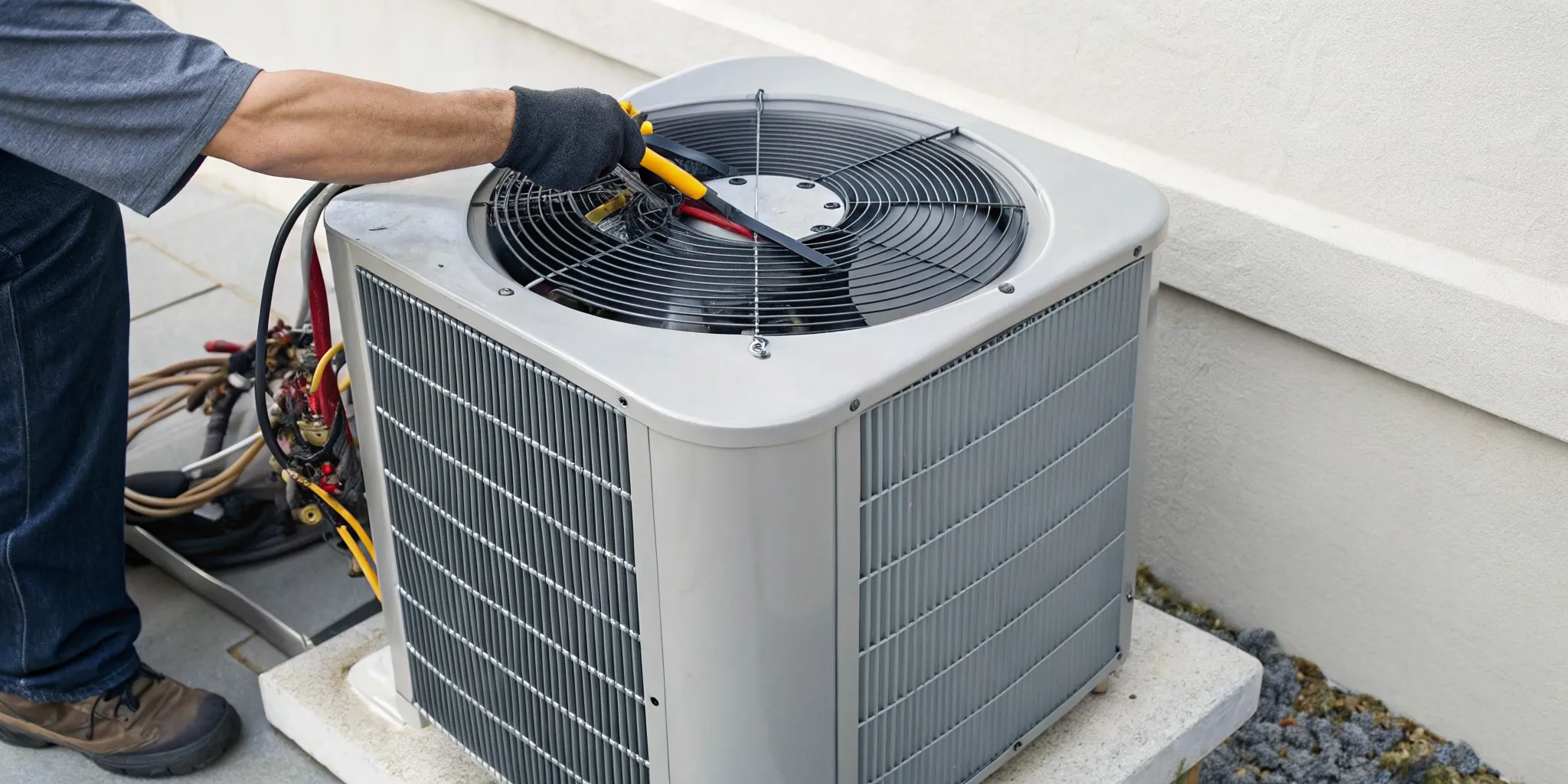
That rattling, grinding, or humming sound from your outdoor AC unit is more than just an annoyance; it’s a cry for help. Your system is trying to tell you something is wrong with its fan. Ignoring these sounds or the weak, lukewarm air coming from your vents can turn a small issue into a major system breakdown. Before you start to worry about the heat and the potential cost, let’s figure out what’s going on. This article will help you decode those warning signs and understand the difference between a simple fix and a problem that requires a professional air conditioner fan repair.
Key Takeaways
- Start with simple home checks: Before assuming the worst, check your thermostat settings, inspect the circuit breaker for a trip, and look at your air filter. These simple steps can often resolve what appears to be a serious fan problem.
- Leave electrical repairs to the experts: For your safety, never attempt to fix issues involving wiring, capacitors, or the fan motor yourself. Grinding noises, a burning smell, or a fan that won't spin at all are clear signals to call a licensed technician.
- Practice proactive maintenance for system health: You can prevent many future fan issues with routine care. Consistently change your air filter, keep the outdoor unit clear of debris, and schedule an annual professional tune-up to catch small problems early.
Signs Your AC Fan Is Failing
Your air conditioner's fan is the unsung hero of your home's cooling system, pulling hot air out and helping circulate cool air inside. When it starts to have trouble, your comfort can quickly disappear, especially during a Florida summer. Spotting the early warning signs of a failing AC fan can help you address the problem before it leads to a complete breakdown or a more expensive repair. Pay attention to what your AC is telling you. If you notice any of these issues, it’s time to investigate.
Fan blades won't spin
This is the most straightforward sign of a problem. If you can hear your AC unit kick on but the fan blades on the outdoor unit aren't moving, something is wrong. The issue could be a tripped breaker or a simple power issue, but often it points to a more serious mechanical or electrical failure. A common culprit is a broken fan motor, which is a job for a professional. Forcing the blades to move can cause more damage, so if a quick reset doesn't work, it's best to call for an expert air conditioning repair to diagnose and fix the root cause safely.
Weak airflow from your vents
Do you feel a weak, lukewarm breeze coming from your vents even when the AC has been running for a while? A struggling fan could be the reason. The fan's job is to push the cooled air through your ductwork and into your home. If the motor is failing or the blades are damaged, it can't generate enough force to maintain strong airflow. Your home won't cool down effectively, and your system will run longer, driving up your energy bills. This is more than an inconvenience; it's a sign your AC is working inefficiently and needs attention.
Strange noises from the AC unit
Your AC unit should operate with a consistent, low hum. If you suddenly hear loud, unusual sounds like rattling, grinding, or clanking, it’s a major red flag. These noises often mean a fan blade is loose, bent, or hitting another part of the unit. A loose object like a stick or rock could also be the cause. Turn off your AC system immediately to prevent further damage. While you can visually inspect the outdoor unit for obvious debris, mechanical noises usually indicate it's time to schedule a professional air conditioning maintenance visit to get it sorted out.
A burning smell or an overheating motor
A burning smell coming from your AC unit is a serious issue that you should never ignore. It often indicates that the fan motor is overheating or has an electrical problem, which poses a significant fire risk. If you notice this smell, turn off your air conditioner at both the thermostat and the circuit breaker immediately. An overheating motor is a clear sign of critical failure and requires urgent attention. Don't try to fix this yourself; you'll need to call for emergency air conditioning services to handle the situation safely and prevent a dangerous outcome.
Fan stops and starts randomly
If your AC fan seems to have a mind of its own, stopping and starting unpredictably, it usually points to an electrical issue. This could be caused by faulty wiring, a failing capacitor, or a problem with the system's control board. These intermittent problems can be frustrating and are often a precursor to a complete system failure. Because these issues involve the system's electrical components, it's not something to experiment with on your own. It's best to have a licensed and insured technician from a trusted company diagnose and repair the complex electrical connections.
What Causes AC Fan Problems?
When your AC fan stops working, it can feel like a major crisis, especially in the Florida heat. The good news is that the cause is often one of a few common issues. Understanding what might be wrong is the first step toward getting your cool air back. From simple obstructions to worn-out parts, several culprits could be behind your fan troubles. Let's walk through the most frequent causes so you can identify what might be happening with your system.
Worn-out fan motor
The fan motor is the heart of your AC's airflow system, and just like any hardworking part, it can wear out over time. If your outdoor unit is silent and the fan blades aren't moving at all, a dead motor is a likely suspect. These motors run for thousands of hours in demanding conditions, and eventually, they can fail. Replacing a fan motor involves disconnecting electrical components and disassembling part of the unit, which is a complex and potentially dangerous task. If you suspect the motor is gone, it’s best to schedule a professional air conditioning repair to get it diagnosed and replaced safely.
Bad capacitor
Think of the capacitor as a small battery that gives your fan motor a powerful jolt to get it spinning. It’s one of the most common parts to fail in an AC unit. If you hear a humming or buzzing noise from your outdoor unit but the fan blades aren’t moving, a bad capacitor is the probable cause. Sometimes, a gentle push with a stick (with the power off!) can get the blades moving, which strongly points to a failed capacitor. While the part itself is inexpensive, replacing it involves handling a high-voltage component. For your safety, this repair should always be left to a trained technician.
Frozen coils
Seeing ice on your air conditioner is a definite red flag. When your indoor evaporator coils freeze over, they can block airflow so completely that it seems like your fan isn't working. This ice is usually a symptom of a deeper problem, such as a clogged air filter, low refrigerant, or even a faulty fan in the first place. Running your AC with frozen coils can cause severe damage to the compressor. If you spot ice, turn your system off immediately to let it thaw and call a professional. They can fix the ice and diagnose the underlying issue affecting your indoor air quality.
Broken fan blades
Loud, unusual noises from your outdoor unit, like clanking or rattling, often point to a problem with the fan blades themselves. Over time, blades can become loose, bent, or cracked from flying debris or simple wear and tear. A damaged blade throws the fan's balance off, creating vibrations that can damage the motor and other parts of the unit. If you hear these sounds, turn off your AC right away to prevent further harm. A visual inspection might reveal a bent or broken blade, but this is a repair that requires an expert to ensure the new blade is installed correctly and balanced.
Clogged air filter
It might sound too simple, but a dirty air filter is a very common cause of AC problems. When the filter gets clogged with dust and debris, it restricts airflow, forcing your system to work much harder to cool your home. This strain can make it seem like the fan is weak or not blowing enough air. In severe cases, it can cause your system's coils to freeze over or the unit to overheat and shut down entirely. Checking your air filter is an easy first step, and changing it regularly is a key part of routine air conditioning maintenance.
Debris around your outdoor unit
Your outdoor condenser unit needs plenty of room to breathe. In Florida, it’s easy for palm fronds, leaves, twigs, and overgrown shrubs to accumulate around the unit, physically blocking the fan from spinning. If the fan is obstructed, it can’t disperse heat effectively, causing your system to struggle or shut down. Before inspecting it, be sure to turn off the power to your AC at both the thermostat and the circuit breaker. You can then safely clear away any visible debris. Keeping a two-foot clearance around your unit is a great preventative habit.
Electrical problems
If you’ve checked the circuit breaker and it hasn’t tripped, the issue could be more complex. Problems like frayed wiring, a faulty contactor (the switch that powers the unit), or other failed electrical components can cut power to the fan motor. These issues are not safe for a DIY fix. Working with your home’s electrical system and the high-voltage components in your AC is extremely dangerous without proper training and tools. If you suspect an electrical fault, it’s time to call a licensed technician. They have the expertise to diagnose and fix the problem safely, especially in an emergency air conditioning situation.
How to Troubleshoot Your AC Fan at Home
When your AC fan stops spinning on a sweltering Florida day, it’s easy to feel a wave of panic. But before you pick up the phone, there are a few simple troubleshooting steps you can take yourself. These checks are quick, easy, and can sometimes solve the problem without needing a service call. Working through these steps can help you either get your cool air back on or pinpoint the issue, so you know exactly what to tell a technician. Let’s walk through it together.
Step 1: Check your thermostat
This might sound obvious, but you’d be surprised how often the thermostat is the culprit. It’s the brain of your HVAC system, so it’s always the best place to start. First, make sure your thermostat is set to “Cool.” Then, check that the set temperature is at least a few degrees lower than the current room temperature. If it’s not, your AC has no reason to turn on. If you have a smart thermostat, double-check its schedule or any "away" settings that might be active. Sometimes a simple adjustment is all it takes to get the fan moving and the cool air flowing again.
Step 2: Inspect the circuit breaker
If the thermostat settings are correct, the next step is to check for a power issue. Your air conditioner is a powerful appliance that uses dedicated circuits. Head to your home’s main electrical panel and look for the breaker labeled for your AC or HVAC system. If the switch is in the middle or "off" position, it has tripped. You can try flipping it firmly back to the "on" position. Also, check for a disconnect switch, which is usually in a small box mounted on the wall near your outdoor unit. If resetting the breaker doesn't work or it trips again immediately, leave it off and call a professional. Repeatedly tripping a breaker signals a deeper electrical problem.
Step 3: Clear away debris
Your outdoor unit’s fan needs clear space to work properly. Over time, leaves, grass clippings, twigs, and even dirt can build up and physically block the fan blades from spinning. For this step, safety is key. Start by turning your AC off at the thermostat, then shut off the power at the circuit breaker. Once you’re sure the power is off, visually inspect the unit. If you see any obstructions, you can use a stick or a gloved hand to carefully clear them away. Keeping this area clean is a vital part of regular air conditioning maintenance and can prevent the fan motor from burning out.
Step 4: Check the air filter
A severely clogged air filter can be a silent system killer. Its job is to trap dust and debris, but when it gets too full, it chokes off the airflow to your system. This lack of airflow can put immense strain on the fan motor, causing it to overheat and shut down. In some cases, it can even cause the indoor evaporator coils to freeze, which also stops the fan. Find your system’s air filter, which is usually located in the indoor air handler or a return air vent. If it looks gray and dirty, replace it with a new one. This simple task protects your AC fan and improves your home's indoor air quality.
Step 5: Reset your AC system
Think of this as the classic "turn it off and on again" trick. Sometimes, minor electronic faults or power surges can cause your AC's control board to get confused. A simple system reset can clear these glitches and get things back to normal. To do this, turn your thermostat to the "off" position. Next, go to your circuit breaker and flip the breaker for your AC system to "off." Wait for about five to ten minutes. This gives the internal components time to fully power down and reset. Then, turn the circuit breaker back on, followed by your thermostat. It’s a long shot, but it’s worth a try before moving on to more complex issues.
Step 6: Look for ice buildup
If your fan still isn't working, take a look at the indoor unit. A common problem is a frozen evaporator coil, which looks like a block of ice has formed on the copper tubing inside your air handler. This ice can prevent the fan from working correctly and is a clear sign of a problem. It’s often caused by restricted airflow from a dirty filter or, more seriously, a low refrigerant level. If you see ice, turn your AC system off completely but leave the fan running (if possible) to help it thaw. A frozen coil almost always points to an underlying issue that needs professional air conditioning repair.
Step 7: Manually spin the fan blades
This final step can help you diagnose a specific part failure, but you must be extremely careful. First, make sure the power to your AC is completely off at the breaker. With the power off, find a long, thin object like a stick or a screwdriver (never use your hands). Reach through the grate on top of the outdoor unit and gently push one of the fan blades to give it a spin. If the fan struggles to start but then continues to spin on its own after your push, you likely have a bad capacitor. The capacitor is like a battery that gives the fan motor the jolt it needs to start. Replacing it is not a DIY job, so if this test works, it's time to contact us for help.
DIY Fix or Call a Pro? How to Decide
When your AC fan stops working, it’s tempting to try fixing it yourself. But it’s crucial to know which tasks are safe for a DIY approach and which ones require a professional. Making the wrong call can lead to more expensive damage or even personal injury. Let’s walk through how to decide when to tackle a problem and when to pick up the phone.
Simple fixes you can safely handle
Before you panic, a few simple checks might solve the problem. First, look at your thermostat. Make sure it’s set to “Cool” and the temperature is lower than the current room temperature. Next, head to your breaker box to see if the AC’s circuit has tripped. If so, try resetting it once. Finally, check your air filter. A clogged filter can restrict airflow so much that it seems like the fan isn't working. Swapping a grimy filter for a clean one is an easy fix. These quick checks are part of regular air conditioning maintenance and can save you a service call.
Repairs to leave to the experts
If the simple fixes don’t work, it’s time to call a technician. Issues involving electrical components are not safe for DIY projects. A bad run capacitor, for example, can hold a dangerous electrical charge even when the power is off. A burnt-out fan motor or faulty wiring also requires specialized knowledge to diagnose and fix safely. Attempting these repairs yourself can lead to electric shock or further damage. When you suspect an electrical problem, the safest solution is to schedule a professional air conditioning repair. Our licensed technicians can handle these complex issues.
How your AC's age affects the decision
Your air conditioner's age plays a big role in the repair-versus-replace debate. If your system is over 10 years old, carefully consider the cost of the repair. Pouring money into an aging unit can become a cycle of one fix after another. If a major repair costs a significant fraction of a new system, it’s often more economical to invest in a replacement. A new unit will be more energy-efficient, saving you money on utility bills, and comes with a warranty. We can help you weigh the costs and explore options for air conditioning installation and replacement.
When to Call a Professional for AC Fan Repair
While it’s great to be a hands-on homeowner, some AC issues are best left to the experts. Trying to fix complex fan problems yourself can be dangerous and often leads to more expensive damage. Knowing when to put down the tools and pick up the phone is key to getting your cool air back safely and quickly. If you’ve gone through the basic troubleshooting steps and are still sweating it out, it’s time to call for professional help. A small issue with a fan can quickly escalate, and a trained technician can spot the root cause before it turns into a system-wide failure.
Red flags that require an expert
If you’ve already checked the thermostat, circuit breaker, and air filter with no luck, it’s a clear sign that the problem is more complex. You should immediately call a professional if you notice any of these red flags. Loud or unusual noises like grinding, screeching, or banging from your outdoor unit often point to a failing motor or broken fan blades hitting other components. If you visually inspect the fan and see cracked or bent blades, don't run the system. A fan that doesn’t spin at all, even after you try to give it a gentle push, likely means the motor is dead. A technician can safely diagnose and fix the problem without risking further damage.
Why electrical issues need a licensed technician
When it comes to your AC’s electrical system, there’s no room for error. Components like the capacitor, which helps start the fan motor, store a powerful electrical charge even when the power is off. Attempting to handle or replace a capacitor without proper training can result in a severe electrical shock. This is not a DIY job. If you suspect an electrical issue, like a constantly tripping breaker or a humming motor that won’t start, your next step should always be to call a professional. Our team at 5 Star Air is made up of fully licensed and insured technicians who have the tools and expertise to handle these components safely, protecting both you and your home.
The risks of waiting in the Florida heat
In Southwest Florida, a broken AC isn't just an inconvenience; it's an emergency. Continuing to run your air conditioner when the fan isn't working can cause catastrophic damage. Without the fan to cool it, the compressor, which is the heart of your AC system, can overheat and fail. Replacing a compressor is one of the most expensive AC repairs you can face. By ignoring the problem, you risk turning a relatively minor fan issue into a complete system breakdown. Don't wait for your home to become unbearable or for a small problem to become a major expense. We offer emergency AC services to get your system back up and running before the heat and the repair bills get out of control.
How Much Does AC Fan Repair Cost?
When your AC fan stops working, especially during a sweltering Florida summer, one of your first questions is probably, "How much will this cost to fix?" It's a fair question, and having a general idea of potential costs can help you make a clear-headed decision instead of a panicked one. The final price for an AC fan repair can vary quite a bit, depending on what’s actually broken. The good news is that many fan issues are straightforward for a professional to diagnose and fix. At 5 Star Air, we believe in honest, transparent pricing, so you’ll always know what to expect before we start any work. We're homeowners too, and we know that nobody likes surprise fees. To help you prepare, we've put together a breakdown of common repair costs to give you a better idea of what you might be looking at.
Cost to replace a fan motor
The fan motor is the heart of your AC's fan system, and replacing it is a common repair. On average, you can expect an AC condenser fan motor replacement to cost between $360 and $548. This estimate typically includes both parts and labor. The motor itself usually costs between $223 and $347, while the labor to install it can range from $137 to $201. Because this job involves working with your system's electrical wiring, it’s a task best left to a licensed technician. A professional air conditioning repair ensures the job is done safely and correctly, getting your system back up and running without any guesswork.
Cost to replace a capacitor
A bad capacitor is another frequent culprit when an AC fan fails. This small but mighty component gives the fan motor the electrical jolt it needs to start and keep running. If your capacitor is the problem, you’re looking at a much less expensive fix than a full motor replacement. While this is not a DIY job, a professional can typically replace a capacitor quickly. The part itself is inexpensive, but since it can hold a dangerous electrical charge even when the power is off, you should always call an expert. An experienced technician can safely handle the replacement and make sure your system is functioning properly.
Factors that influence the final price
Several variables can affect the total cost of your AC fan repair. The type of fan motor in your unit is a big one; high-efficiency or variable-speed motors cost more to replace than standard, single-speed models. The age and brand of your air conditioner also play a role, as parts for older or less common units can be harder to find and more expensive. It’s also a good idea to check if your AC is still under warranty, as parts may be covered, leaving you responsible only for labor. For a clear and accurate estimate tailored to your specific system, it's always best to contact us for a diagnosis.
Repairing vs. replacing: a cost breakdown
Sometimes, the big question isn't just the cost of the repair, but whether it's worth it. A good rule of thumb is the 50% rule: if the repair costs about half as much as a new AC unit, it often makes more sense to invest in a replacement. This is especially true for older systems. Deciding whether to fix your unit depends on its age, the specific problem, and the repair cost. A new unit comes with a fresh warranty, improved energy efficiency, and modern technology that can save you money on utility bills over time. If you're facing a costly repair on an aging system, considering an air conditioning installation and replacement might be the smarter long-term financial decision.
How to Prevent Future AC Fan Problems
After dealing with a broken AC fan, the last thing you want is a repeat performance. The good news is that you can significantly reduce the risk of future problems with a little proactive care. Think of it as preventative medicine for your air conditioner. These simple habits don't take much time, but they go a long way in keeping your system running smoothly, extending its lifespan, and saving you from the stress of another unexpected breakdown. Especially here in Florida, where our ACs work overtime, a little prevention is the key to staying cool and comfortable all year round. By paying attention to your system and staying on top of a few key tasks, you can keep your fan spinning and the cool air flowing.
Change your air filter regularly
One of the easiest and most effective ways to prevent AC fan issues is to change your air filter consistently. A dirty or clogged filter blocks airflow, forcing your entire system, including the fan, to work much harder than it should. This strain can lead to the motor overheating and failing prematurely. It’s like asking your AC to breathe through a clogged straw. Make it a habit to check your filter every month. If you can't see light through it, it's time for a new one. This simple step is a cornerstone of good air conditioning maintenance and helps keep your energy bills down, too.
Schedule annual AC maintenance
While changing filters is a great DIY task, nothing replaces a professional check-up. Scheduling annual maintenance with a qualified technician is like taking your car in for a tune-up; it catches small problems before they become big, expensive ones. During a maintenance visit, a technician will clean and inspect all the components of your AC, including the fan motor and blades. They can lubricate moving parts, check electrical connections, and test the capacitor to ensure it’s working correctly. This professional oversight ensures your system runs at peak efficiency and helps you avoid a sudden failure during a summer heatwave.
Keep your outdoor unit clear
Your outdoor AC unit, the condenser, needs space to breathe. Plants, leaves, palm fronds, and dirt can easily accumulate around and inside the unit, obstructing the fan and blocking airflow. This forces the system to work harder to release heat, which can cause it to overheat and damage the fan motor. Take a few minutes every month to clear away any debris, making sure there's at least two feet of clearance around the entire unit. If you see debris inside the fan cage, always turn the power off at the breaker before attempting to remove it for your safety.
Know the early warning signs
Your air conditioner will often give you clues that something is wrong before it fails completely. Paying attention to these signs can help you call for an air conditioning repair before the fan gives out. Listen for any unusual noises like grinding, rattling, or buzzing coming from your unit. Notice if the fan seems to start and stop randomly or if the blades are spinning slower than usual. A burning smell or a motor that feels excessively hot to the touch are also major red flags. Catching these symptoms early can often mean a simpler, less expensive fix.
Related Articles
- 5 Signs Your AC Needs Repair
- Benefits of Regular HVAC Maintenance
- HVAC Tips & Insights Blog - Expert Advice from 5 Star Air
- AC Repair Services
- Maintenance Services
Frequently Asked questions
What's the most likely reason my AC fan stopped working? While several issues could be the cause, two of the most common culprits are a bad capacitor or a worn-out fan motor. If you hear a humming or buzzing sound from the outdoor unit but the blades aren't moving, it often points to a failed capacitor. If the unit is completely silent when it should be running, the motor itself may have failed.
Is it safe for me to try and fix the fan myself? You can safely perform basic troubleshooting, like checking your thermostat settings, inspecting the circuit breaker, and changing a dirty air filter. However, any repair that involves the system's electrical components, such as replacing a capacitor or fan motor, is dangerous and should only be handled by a licensed professional. These parts can hold a powerful electrical charge even when the power is off.
My fan is making a weird noise but still spinning. Can I just wait and see what happens? No, you should turn the system off and call for a repair. Strange noises like grinding, rattling, or screeching are clear signs that a part is loose, broken, or failing. Continuing to run the AC can cause a small, fixable problem to cascade into a much more serious and expensive failure, potentially damaging the entire unit.
How can I prevent my AC fan from breaking again in the future? The best way to avoid future fan problems is through consistent, proactive care. The two most important actions you can take are scheduling annual professional maintenance and changing your air filter regularly. A technician can spot and fix small issues before they become major breakdowns, and a clean filter prevents the strain that leads to premature failure.
My AC is pretty old. Is it worth it to repair the fan, or should I just get a new unit? This is a great question, and it depends on the cost of the repair versus the age of your system. A good guideline is to consider replacement if your unit is over 10 years old and the repair cost is a significant fraction of a new system's price. Investing in a new, energy-efficient unit can often be a smarter long-term financial decision, saving you on future repairs and monthly utility bills.