AC Not Blowing Air? 7 Easy Fixes to Try Now
Many people don’t realize their air conditioner is actually two separate systems working in tandem: an outdoor unit that releases heat and an indoor unit that blows cool air through your home. So, when you experience an ac not blowing air, it’s a clear sign that the two parts are not communicating correctly. Your outdoor unit may be running perfectly, but if the indoor blower fan isn’t working, all that cooling power goes to waste. This guide is designed to demystify the problem by breaking down the most common indoor unit failures, from simple thermostat setting errors to a tripped circuit breaker, so you can understand exactly what's happening and what to do about it.
Key Takeaways
- Troubleshoot the Basics First: Before assuming the worst, always check for simple problems you can fix yourself. Start by inspecting for a clogged air filter, verifying your thermostat is on the correct settings, and ensuring the unit's circuit breaker has not tripped.
- Airflow Is Likely Blocked: A running AC with no air coming out means something is physically stopping the air's path. This is often a dirty filter that has caused the evaporator coils to freeze into a block of ice, but it can also be obstructed vents or damaged ductwork.
- Some Issues Require a Professional: While DIY checks are helpful, certain symptoms are red flags that need an expert. Repeatedly freezing coils, hissing sounds (which suggest a refrigerant leak), a humming but motionless blower motor, or any electrical problem are clear signs to call a technician.
Why Is My AC Running But Not Blowing Air?
It’s one of the most frustrating feelings, especially here in Florida: you hear your air conditioner kick on, but you feel absolutely no air coming from the vents. Your home gets warmer, and you start to worry about a costly repair. The good news is that the cause isn't always a major disaster. When your AC is running but not blowing, it means the outdoor unit (the condenser) is working, but the indoor unit (the air handler or furnace) isn't circulating the air. This can happen for several reasons, ranging from a simple fix you can handle yourself to a problem that needs a professional touch. Let's walk through the most common culprits so you can figure out what’s going on with your system.
Clogged Air Filter
Think of your air filter as the lungs of your HVAC system. Its job is to trap dust, pollen, and pet dander before they can get into your AC unit and your home’s air. When that filter gets clogged, it’s like trying to breathe through a thick blanket. Air can’t pass through it easily, which means the blower fan can’t push air into your ducts. This is one of the most common causes of airflow problems and, thankfully, the easiest to fix. A severely clogged filter not only stops airflow but also forces your system to work much harder, which can lead to more serious issues like frozen coils. Regular air conditioning maintenance is key to preventing this.
Frozen Evaporator Coils
Your evaporator coil is the part of your indoor AC unit that gets cold and removes heat and humidity from the air. For it to work correctly, it needs steady airflow. If a dirty filter or blocked vents restrict that flow, the coil can get so cold that the condensation on it freezes into a solid block of ice. Once it’s frozen, air can no longer pass through, and you’ll get no airflow from your vents even though the system is running. Low refrigerant can also cause this. If you see ice on your unit, turn it off immediately to let it thaw. If it happens again, it’s time to call for air conditioning repair because it points to a bigger problem.
Failed Blower Motor
The blower motor is the heart of your home's air circulation. It’s a powerful fan inside your air handler that pushes the conditioned air through your ductwork and out of your vents. If this motor fails, your outdoor unit might still run and cool the refrigerant, but the cool air has no way to get to you. You might hear a humming noise from the indoor unit, which is the sound of the motor trying but failing to start. A failed blower motor is a serious issue that involves electrical components and should always be handled by a licensed technician. This is a situation where you’ll want to call for emergency air conditioning services to get your air moving again.
Tripped Circuit Breaker
Your air conditioning system is actually two systems that work together: the outdoor condenser and the indoor air handler. Each one is often connected to a separate circuit breaker in your home’s electrical panel. It’s possible for the breaker powering your indoor unit (the one with the blower fan) to trip while the outdoor unit continues to run. This will give you the exact symptom of the AC running but not blowing air. Before you call for help, take a look at your breaker box. If you see a switch that’s flipped to the middle or “off” position, try flipping it back on. If it trips again right away, don’t touch it. That means there’s an electrical fault that needs a professional.
Blocked Ductwork
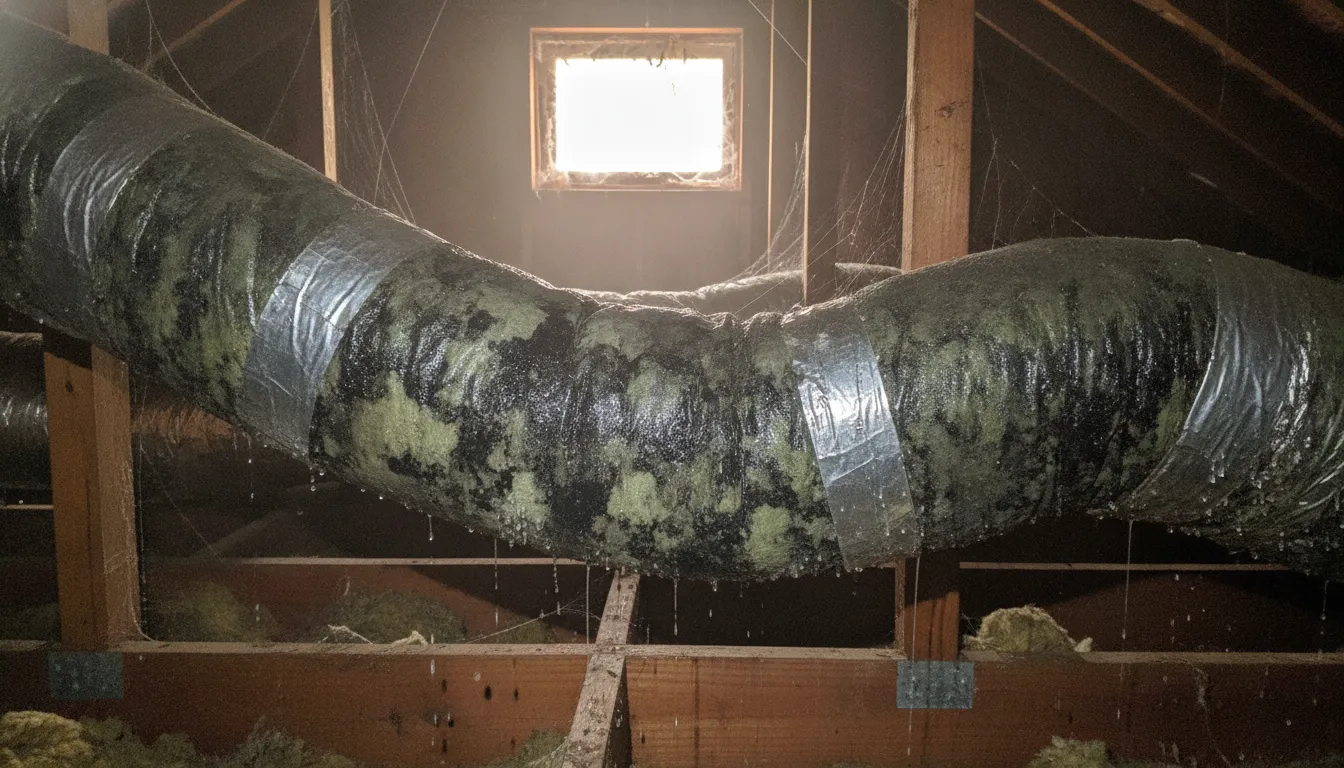
Your ducts are the network of tunnels that deliver cool air to every room in your house. If these pathways are blocked, the air can’t complete its journey. The blockage could be something as simple as a closed or obstructed vent; make sure all your vents are open and not blocked by furniture or rugs. However, the problem could also be deeper inside the ductwork. Ducts can become disconnected, crushed, or clogged with debris over time, especially in attics or crawl spaces. If some rooms are getting air while others aren’t, or the airflow is weak everywhere, you may need a professional to inspect your ducts. We can help with duct sanitization and replacement to ensure clear passage for your air.
Clogged Condensate Line
Your AC doesn’t just cool the air; it also removes a lot of humidity. This moisture is collected and drained away through a small PVC pipe called a condensate line. Here in Florida, the high humidity means this line can easily get clogged with algae, mold, and sludge. To prevent water damage from an overflow, most AC units have a safety float switch in the drain pan. If the water level gets too high because of a clog, this switch will shut off your indoor unit to stop it from producing more condensation. The outdoor unit may continue to run, but the indoor blower will not. Clearing this line can sometimes be a simple DIY, but it’s often a messy job best left to a pro.
Wrong Thermostat Settings
Sometimes the solution is so simple it’s easy to overlook. Before you assume the worst, take a moment to check your thermostat. It’s the brain of your entire HVAC system, and a wrong setting can cause all sorts of confusion. First, make sure the system is set to “COOL,” not “OFF” or “HEAT.” Next, check the fan setting. If it’s set to “ON,” the fan will run constantly, even when the AC isn’t cooling. If it’s set to “AUTO,” it should only blow air when the system is actively cooling. Finally, ensure the temperature is set lower than the current room temperature. If the set temperature is 78 degrees and your house is 75, the AC has no reason to turn on.
How a Dirty Air Filter Restricts Airflow
Think of your AC's air filter as the lungs of your system. Its main job is to trap dust, pollen, and other airborne particles, cleaning the air before it circulates through your home. But just like any filter, it eventually gets full. When that happens, it becomes clogged with a thick layer of grime, making it incredibly difficult for air to pass through. This blockage forces your entire AC system to work much harder just to pull in enough air to cool.
This strain doesn't just reduce the cool air coming from your vents; it can cause a domino effect of other issues. The reduced airflow can cause the evaporator coils inside your unit to get too cold and freeze over, leading to a complete system shutdown. A dirty filter is one of the most common and easily fixable reasons for an AC that's running but not blowing air. Checking it is always the best first step in troubleshooting.
Signs You Need a New Filter
Not sure if your filter is the culprit? The most straightforward sign is a visual one. Pull the filter out of its slot and hold it up to a light. If it’s covered in a visible layer of gray dust and debris, it’s time for a change. If you can’t see light passing through it, your air conditioner can't pull air through it either.
Other clues include a noticeable drop in airflow from your vents, dust building up more quickly on surfaces around your home, or your energy bills creeping up because the system is running constantly to keep up. A severely clogged filter can also contribute to your AC coils freezing, so it's a simple check that can prevent a much bigger air conditioning repair.
How Often to Change Your AC Filter in Florida
Here in Florida, our air conditioners work overtime. The combination of high humidity, a long cooling season, and plenty of pollen means our filters get dirty faster than in other parts of the country. As a general rule, you should check your filter every month, even if you don't end up changing it.
For standard one-inch fiberglass filters, plan on replacing them every 30 days. If you use higher-quality pleated filters, you can often go 60 to 90 days. However, if you have pets, family members with allergies, or live near a construction zone, you’ll want to change it more frequently. Regular filter changes are a core part of simple AC maintenance that keeps your system running efficiently.
Find the Right Filter for Your System
Replacing your air filter is simple, but you need to make sure you get the right one. The most important factor is size. The filter’s dimensions are almost always printed right on its cardboard frame. Just write down those numbers (length, width, and depth) before you head to the store or shop online.
You’ll also see a MERV rating, which stands for Minimum Efficiency Reporting Value. This number, typically between 1 and 16, tells you how effective the filter is at trapping small particles. While a higher MERV rating means cleaner air, be careful. A filter that is too restrictive can also block airflow if your system isn't powerful enough for it. If you’re unsure what’s best for your unit, check your system’s manual or contact us for advice.
Could Your Thermostat Settings Be the Problem?
It sounds almost too simple to be true, but sometimes the reason your AC isn’t blowing air has nothing to do with the unit itself. Your thermostat is the brain of your entire HVAC system, telling it when to turn on, how hard to work, and when to shut off. If its settings are off, or if it isn't working correctly, it can make your perfectly functional air conditioner seem like it’s broken. Before you assume the worst, a quick check of your thermostat can save you a lot of time and worry.
A simple mistake, like having it on the wrong mode or a dead battery, can stop airflow in its tracks. We’ll walk through a few common thermostat issues you can check yourself. These quick steps can often get your air moving again without needing to call for backup. However, if you’ve checked your settings and are still facing a silent system, it could point to a faulty thermostat or a deeper electrical issue. In that case, a professional air conditioning repair is your safest and most reliable solution.
Check Your Mode and Temperature
First things first, let’s look at the most basic settings. It’s surprisingly easy for these to get bumped or changed accidentally. Start by making sure your thermostat is set to the 'cool' mode. If it’s on 'heat' or 'fan only,' your AC won’t produce cold air. Next, check the temperature setting. For the AC to kick on, the set temperature must be lower than the current temperature in your home. If you have it set to 78 degrees and the room is already 75, your system will stay off.
Also, don’t forget about the batteries. Many digital thermostats are battery-powered, and a low or dead battery can cause the screen to go blank or the system to stop communicating with your AC unit. It’s a simple fix that can make a world of difference.
Check the Fan Setting
Your thermostat’s fan setting controls the blower motor, which is responsible for pushing air through your vents. You’ll typically see two main options: 'ON' and 'AUTO.' Understanding the difference is key to troubleshooting. When the fan is set to 'AUTO,' it will only run when your air conditioner is actively cooling the air. Once the desired temperature is reached, both the cooling system and the fan will shut off.
If your fan is set to 'ON,' it will run continuously, 24/7, whether the AC is cooling or not. If your fan is set to 'AUTO' and you’re not feeling any air, it could mean your system isn’t starting its cooling cycle. Try switching the fan to 'ON' to see if the blower works. If air starts moving, you know the fan motor is working, and the problem lies elsewhere.
Avoid These Common Thermostat Mistakes
Beyond the basic settings, a few other thermostat-related missteps can cause airflow problems. One common mistake is placing heat-producing objects, like a lamp or a TV, too close to the thermostat. This can trick it into thinking the room is warmer than it is, causing your AC to run constantly or behave erratically. Similarly, a thermostat located in direct sunlight can also get false readings.
If you suspect the thermostat itself is the problem, you might be tempted to open it up. However, if you see any frayed or damaged wires, it’s best to stop and call a professional. A faulty thermostat can be a sign of a more complex electrical issue, and attempting a DIY fix can be dangerous. When in doubt, it’s always best to contact us for a safe and accurate diagnosis.
What to Do if Your Evaporator Coil Is Frozen
Let's talk about a common Florida AC issue: a frozen evaporator coil. It sounds dramatic, and seeing a block of ice on your indoor AC unit can be alarming. The evaporator coil is the part of your system that absorbs heat from your home's air. When something disrupts the airflow or refrigerant levels, this coil can get so cold that condensation freezes on it, turning it into a solid block of ice. This ice block completely stops air from passing through, which is why your AC might be running but you feel nothing coming from the vents. Don't panic, though. This is often something you can troubleshoot yourself before making a service call. Follow these steps to safely thaw your system and identify the cause.
Signs of a Frozen Evaporator Coil
The most obvious sign is that your AC is running, but little to no air is blowing from your vents. Your house will start to feel warm and stuffy, even with the thermostat set to a low temperature. You might also notice water pooling around your indoor air handler as some of the ice melts and overflows the drain pan. If you can access your indoor unit, you may even see ice or frost covering the copper refrigerant lines or the coil itself. These are all clear indicators that your system is frozen up and needs immediate attention to prevent damage.
Step 1: Turn Off the AC
The very first thing you need to do is turn your entire AC system off at the thermostat. Switch it from "Cool" to "Off." This is crucial because continuing to run the AC while the coil is frozen can cause serious and expensive damage to the compressor. Once the system is off, you need to let the ice melt completely. This can take anywhere from a few hours to a full day, depending on how much ice has built up. You can also turn on the fan setting (not cool) to help circulate air and speed up the thawing process.
Step 2: Check the Air Filter
While your system is thawing, it's the perfect time to play detective. The most common culprit behind a frozen evaporator coil is a dirty, clogged air filter. A blocked filter suffocates your AC system, restricting the warm air it needs to flow over the coils. Without that airflow, the coils get too cold and freeze. Pull out your air filter and hold it up to a light. If you can't see light through it, it's long past due for a change. Replace it with a clean one to ensure proper airflow is restored once you restart the system. Regular air conditioning maintenance always includes a filter check for this very reason.
Step 3: Unblock Vents and Registers
Your AC system needs to breathe. After you've checked the filter, take a quick walk around your house and check all the supply and return air vents. Sometimes, a vent gets accidentally closed, or a piece of furniture, a rug, or a pile of laundry gets pushed up against one. Blocked vents create the same airflow problem as a dirty filter, which can contribute to a frozen coil. Make sure every vent is open and has plenty of clear space around it to allow air to circulate freely throughout your home. It’s a simple step that can make a big difference.
Step 4: Restart Your System
Once you're certain the coil has completely thawed (no more dripping water) and you've replaced the filter and cleared all vents, it's time to restart your system. First, turn the fan on by itself for about 30 minutes to help dry out any remaining moisture on the coil. Then, you can switch the thermostat back to "Cool" and set your desired temperature. Monitor your system closely. If the air starts blowing cold and stays that way, you may have solved the problem! If the coil freezes up again, it's a sign of a more complex issue, like a refrigerant leak or a mechanical failure, and it's time to call for professional air conditioning repair.
Is Your Ductwork Blocking Airflow?
Sometimes, the problem isn't your AC unit at all, but the network of tunnels that carries cool air to each room. Your ductwork is like the highway system for your home's air, and if there's a roadblock or a major pothole, you'll feel the effects. Blockages, leaks, or damage can seriously reduce airflow, leaving you with a running AC that doesn't seem to do much cooling. Let's look at how to tell if your ducts are the problem and what you can do about it.
Signs of Leaky or Blocked Ducts
If your home has hot and cold spots, that’s a classic sign of a ductwork issue. Maybe your bedroom is perfectly cool, but the living room feels stuffy. This happens when air isn't being distributed evenly. Another telltale sign is an unusual amount of dust, especially around your air vents. If you're constantly dusting, it could mean your ducts are dirty and blowing particles into your living space. You might also notice weak airflow from the vents or even hear whistling sounds as air escapes through cracks. These leaks force your AC to work harder, which often shows up as a surprise on your monthly energy bill. If these symptoms sound familiar, it might be time for a professional duct sanitization.
How to Handle Duct Leaks and Blockages
First, do a quick visual check. Make sure none of your vents are closed or blocked by furniture, rugs, or curtains. A simple obstruction can stop airflow to an entire room. If you can safely access any of your ductwork, like in an attic or crawl space, look for obvious tears, holes, or sections that have come apart. While you might be tempted to grab some duct tape for a quick fix, it’s not a permanent solution for sealing leaks. For anything beyond a simple vent blockage, it’s best to call in a professional. Our technicians can accurately locate hidden leaks and blockages and perform a proper air conditioning repair to ensure your system runs efficiently and safely.
AC Not Blowing Air? 7 Fixes to Try First
When your AC is running but your home isn't cooling down, it’s incredibly frustrating, especially in the Florida heat. Before you assume the worst, there are several simple troubleshooting steps you can take. These quick checks can often solve the problem without the need for a service call, saving you time and money. Many common airflow issues have surprisingly easy fixes that you can handle yourself in just a few minutes.
Work through these seven steps one by one. If you try them all and your AC still isn’t blowing air, it’s a clear sign that it’s time to call in a professional for help.
1. Change the Air Filter
A clogged air filter is one of the most common culprits behind poor airflow. When the filter is packed with dust and debris, your system has to work much harder to pull air through, resulting in weak or no airflow from your vents. This strain can even cause your system’s evaporator coils to freeze over. Check your filter, and if it looks dirty, replace it. This simple step is a critical part of regular air conditioning maintenance and can instantly improve your system’s performance and your home’s air quality.
2. Reset the Circuit Breaker
Sometimes the issue is as simple as a tripped circuit breaker. Your AC system has multiple components, including the outdoor condenser and the indoor air handler (the blower), which may be on separate breakers. A power surge could have tripped the breaker for the indoor unit, even if the outdoor unit seems to be running. Go to your home’s electrical panel, find the breaker labeled for your AC or air handler, and flip it completely off and then back on. If the breaker trips again immediately, leave it off and call for emergency air conditioning services, as this indicates a more serious electrical problem.
3. Unblock All Air Vents
Your AC system is designed to circulate air through a balanced, open loop. If vents are closed or blocked, it disrupts this balance and can severely restrict airflow, making it feel like the AC isn't blowing at all. Take a quick walk through your home and make sure all the supply vents (the ones blowing air out) are open. Also, check that they aren’t blocked by furniture, rugs, or curtains. Don’t forget to check the return air grilles, which are the larger vents that pull air into the system, as they also need to be clear of obstructions.
4. Clear Debris From the Outdoor Unit
Your outdoor AC unit, or condenser, works by releasing heat from your home into the outside air. To do this effectively, it needs plenty of clear space for air to circulate around it. If the unit is crowded by plants, leaves, grass clippings, or other yard debris, it can’t "breathe" properly. This can cause the system to overheat and reduce its cooling ability. Make sure there are at least two feet of clear space around the entire outdoor unit. Gently clear away any visible debris to help restore proper function.
5. Clean the Outdoor Unit
Beyond just clearing away large debris, the metal fins on your outdoor unit can become caked with dirt, dust, and pollen over time. This layer of grime acts like an insulator, trapping heat and forcing your system to work harder. To clean it, first, turn off the power to the unit at the circuit breaker. Then, use a garden hose with a gentle spray nozzle to rinse the fins from top to bottom. Avoid using a high-pressure washer, as it can easily bend the delicate fins. A clean condenser is an efficient condenser.
6. Unclog the Condensate Drain Line
In Florida's humid climate, your AC removes a lot of moisture from the air. This water is funneled out of your home through a condensate drain line, which is usually a white PVC pipe. If this line becomes clogged with algae or sludge, water can back up into the system. Most units have a safety float switch that will shut off the AC to prevent water damage. You can often clear a minor clog yourself by using a wet/dry vacuum on the end of the pipe outside your home. If the clog persists, it’s best to call for professional air conditioning repair.
7. Inspect Ductwork for Damage
The air from your AC unit travels to your rooms through a network of ducts. If this ductwork is crushed, disconnected, or has significant leaks, the cool air will escape before it ever reaches your vents. While much of your ductwork is hidden, you can perform a visual inspection of any accessible ducts in your attic, garage, or crawlspace. Look for obvious tears, gaps, or sections that have come apart. While minor leaks can be sealed with mastic tape, significant ductwork damage requires professional attention to ensure your system operates efficiently.
Common AC Troubleshooting Mistakes to Avoid
When your AC stops blowing air, it’s easy to feel a little frantic, especially here in Florida. While it’s great to be proactive and try to figure out the problem, some common missteps can make the situation worse or even put you in danger. Before you start taking things apart, let’s walk through a few troubleshooting mistakes you’ll want to avoid. Taking a moment to think things through can save you time, money, and a lot of stress.
Forgetting the Basics
It happens to the best of us. In a rush to find a major problem, we often skip right over the simplest solutions. Before you assume the worst, take a deep breath and check the basics. The most common culprit is a dirty air filter, which can get so clogged with dust and debris that it completely blocks airflow. Another simple thing to check is your air vents. Make sure they are all open and that nothing, like a new piece of furniture or a stray toy, is blocking them. These small steps are part of any good AC maintenance routine and can often solve the problem in minutes.
Attempting Complex DIY Repairs
I love a good DIY project as much as anyone, but your air conditioner’s internal components are not the place to experiment. While you might be able to clean dust off the blower blades, trying to fix a failed blower motor or other electrical parts is a job for a professional. These components are complex and carry electrical currents that can be incredibly dangerous if you don’t know exactly what you’re doing. Trying to fix it yourself can lead to further damage or serious injury. If you’ve checked the basics and still have no airflow, it’s time to call for professional air conditioning repair.
Forgetting to Turn Off the Power
This is the golden rule of AC troubleshooting: always turn off the power before you open any panels or inspect internal parts. Go to your home’s breaker box and flip the switch that controls your HVAC system. This simple step protects you from the risk of electric shock. It also prevents the system from kicking on while you’re working on it. Furthermore, if you suspect a serious issue like a frozen coil or a strange noise, it’s best to turn the unit off completely and leave it off. Running a malfunctioning AC can turn a minor issue into a catastrophic failure, leading to much more expensive repairs. If you think it's an emergency, it's always safest to call for emergency AC services.
When to Call an HVAC Professional
Some AC issues are simple enough to handle on your own, but many problems require a trained eye and a specific set of tools. Knowing when to put down the toolbox and pick up the phone can save you from a bigger headache and a more expensive bill down the road. If you’ve tried the basic fixes and your home is still feeling the Florida heat, it’s probably time to call in an expert. Certain symptoms are clear signs that your system needs professional air conditioning repair. Ignoring them can lead to more extensive damage and discomfort, something nobody wants in the middle of a Florida summer. It's always better to be safe than sorry, especially when dealing with a system as complex as your air conditioner. A quick professional diagnosis can often prevent a small issue from turning into a major system failure.
A Failed Blower Motor
The blower motor is the powerhouse that pushes cool air through your home’s ductwork. If your outdoor unit is running but you feel zero airflow from your vents, a failed blower motor is a likely culprit. You might even hear a humming sound from the indoor unit, which is the motor trying (and failing) to start. Replacing a blower motor involves working with complex electrical components and wiring. For your safety and to ensure the job is done right, this is a task best left to a licensed technician who can accurately diagnose the problem and install the correct replacement part for your system.
Coils That Keep Freezing
Finding your evaporator coils covered in a layer of ice can be alarming. While a one-off freeze can sometimes be solved by changing a clogged air filter, coils that repeatedly freeze are a red flag for a more serious issue. This often points to a low refrigerant level, which is usually caused by a leak somewhere in the system. Continuing to run your AC in this condition can severely damage the compressor, a very expensive component to replace. If you’ve thawed the coils and replaced the filter but the ice returns, it’s time to schedule professional air conditioning maintenance.
You Suspect a Refrigerant Leak
Refrigerant is the lifeblood of your air conditioner; it’s the substance that absorbs heat from your home. If your system has a leak, it won’t be able to cool effectively, no matter how low you set the thermostat. Besides frozen coils, other signs of a leak include a hissing sound near your AC unit or utility bills that are suddenly much higher. Handling refrigerant requires special certification, as it can be harmful to both you and the environment. If you think you have a leak, call for emergency air conditioning services to have a certified technician safely find and repair it.
Complex Electrical Issues
When it comes to your AC system, any electrical problem should be considered off-limits for DIY repairs. Issues like a circuit breaker that keeps tripping, frayed wires, or a malfunctioning capacitor are not just signs of a problem; they are potential safety hazards. Attempting to fix these yourself without proper training can lead to electric shock or cause further damage to your unit. Our technicians have the diagnostic tools and expertise to safely identify and resolve any electrical faults, ensuring your system runs reliably and safely. Don’t take the risk; contact us to handle it.
Your AC is Over 10 Years Old
Air conditioners in Florida work hard, and even the best units have a limited lifespan, typically around 10 to 15 years. If your older AC isn't blowing air with the force it used to, or if it requires frequent repairs, it might be reaching the end of its useful life. While one more repair might seem like the cheaper option, you could be throwing money at a system that’s becoming less efficient by the day. A professional can assess your unit’s condition and help you weigh the costs of another repair against the long-term savings of a new, energy-efficient air conditioning installation.
Prevent Airflow Problems With Regular AC Maintenance
The best way to deal with AC airflow problems is to stop them before they start. Think of regular maintenance as preventative care for your air conditioner. A little attention throughout the year goes a long way in keeping your system running efficiently, especially during those long, hot Florida summers. Consistent upkeep ensures every component, from the air filter inside to the condenser unit outside, is clean and working correctly. This proactive approach not only guarantees strong, steady airflow but also helps you avoid the stress and expense of an unexpected breakdown. When your system is well-maintained, you get reliable cooling, better air quality, and the peace of mind that comes with knowing your AC is ready to handle the heat.
Schedule Annual Professional Maintenance
Having a professional inspect your system once a year is one of the most effective ways to prevent future problems. While you can handle some tasks yourself, a trained technician has the tools and expertise to perform a deep clean and comprehensive inspection. During a tune-up, a technician can spot worn-out parts, clean critical components that are difficult to reach, and check refrigerant levels. This annual check-up allows them to fix small issues before they turn into major, expensive repairs. Scheduling professional air conditioning maintenance is an investment in your system’s longevity and performance.
Change Your Filters Regularly
This is easily the most important maintenance task you can do yourself. Your AC system breathes through its air filter. When the filter gets clogged with dust, pet dander, and other particles, it restricts airflow. Your system has to work much harder to pull air through, which wastes energy and can cause serious strain on the components. A severely clogged filter can even lead to frozen evaporator coils, a common reason for an AC repair call. In Florida, it’s a good idea to check your filter every month and change it at least every 90 days, or more often if you have pets or allergies.
Inspect the Condensate Line
Your air conditioner doesn't just cool the air; it also removes humidity. That moisture is collected and drained away through a small pipe called the condensate line. Here in Florida, the combination of moisture and warmth creates the perfect environment for algae and mold to grow inside this line, causing a clog. When the line is blocked, water backs up and can trigger a safety switch that shuts down your entire AC system. You can prevent this by periodically inspecting the line’s exit point outside your home to ensure water is dripping out when the AC is running.
Keep the Outdoor Unit Clear
The outdoor unit, or condenser, is responsible for releasing the heat that was removed from your home. For it to work properly, air needs to circulate freely around it. Landscaping, fallen leaves, grass clippings, and dirt can easily block the fins on the unit, trapping heat and forcing your system to work overtime. This reduces efficiency and can lead to overheating. Make it a habit to keep a clearance of at least two feet around the entire unit. You can also gently rinse the exterior with a garden hose to wash away any built-up grime as part of your regular AC maintenance routine.
Related Articles
- 5 Signs Your AC Needs Repair
- AC Repair Services
- AC Services
- Duct Replacement Services
- HVAC Tips & Insights Blog - Expert Advice from 5 Star Air
Frequently Asked Questions
What's the very first thing I should check if my AC isn't blowing air? Before you start worrying about a major repair, always check two simple things: your thermostat and your air filter. First, make sure your thermostat is set to "Cool" and the temperature is set lower than the current room temperature. Next, pull out your air filter. If it's visibly gray and clogged with dust, it's likely blocking airflow and needs to be replaced. These two checks solve the problem more often than you might think.
I see ice on my indoor unit. What should I do right now? If you see ice on your indoor unit or the pipes connected to it, the first thing you need to do is turn your AC system completely off at the thermostat. This will stop the cycle and allow the ice to melt. Running the system while it's frozen can cause serious damage to the compressor. While it thaws, which can take several hours, check your air filter and replace it if it's dirty. If the unit freezes again after you restart it, it’s a sign of a deeper issue like a refrigerant leak, and you should call for professional help.
My airflow is just weak, not completely gone. Could it be the same issue? Yes, absolutely. Weak airflow is often the first warning sign of the same problems that cause a complete lack of airflow. A filter that is starting to get clogged or ducts that are partially blocked will reduce the amount of air coming from your vents. Think of it as a problem in the making. Addressing the cause of weak airflow now, such as by changing the filter or clearing your vents, can prevent your system from stopping altogether.
If my breaker keeps tripping, can I just keep resetting it? No, you should never repeatedly reset a circuit breaker that keeps tripping. A breaker is a safety device designed to shut off power when it detects an electrical problem, like an overload or a short circuit. If it trips once, it's okay to try resetting it. If it trips again right away, it's signaling a persistent and potentially dangerous fault in the system. Leave the breaker off and call a licensed technician to safely diagnose and fix the electrical issue.
What's the single most important thing I can do to prevent airflow problems? Without a doubt, the most important preventative task you can perform is changing your air filter regularly. It’s a simple, inexpensive step that has a huge impact on your entire system. A clean filter allows your AC to breathe easily, preventing the strain that leads to frozen coils, overworked blower motors, and poor air quality. Here in Florida, checking it monthly and changing it every 1 to 3 months is the best investment you can make in your AC's health.