AC Running But Fan Not Spinning? A Quick DIY Guide
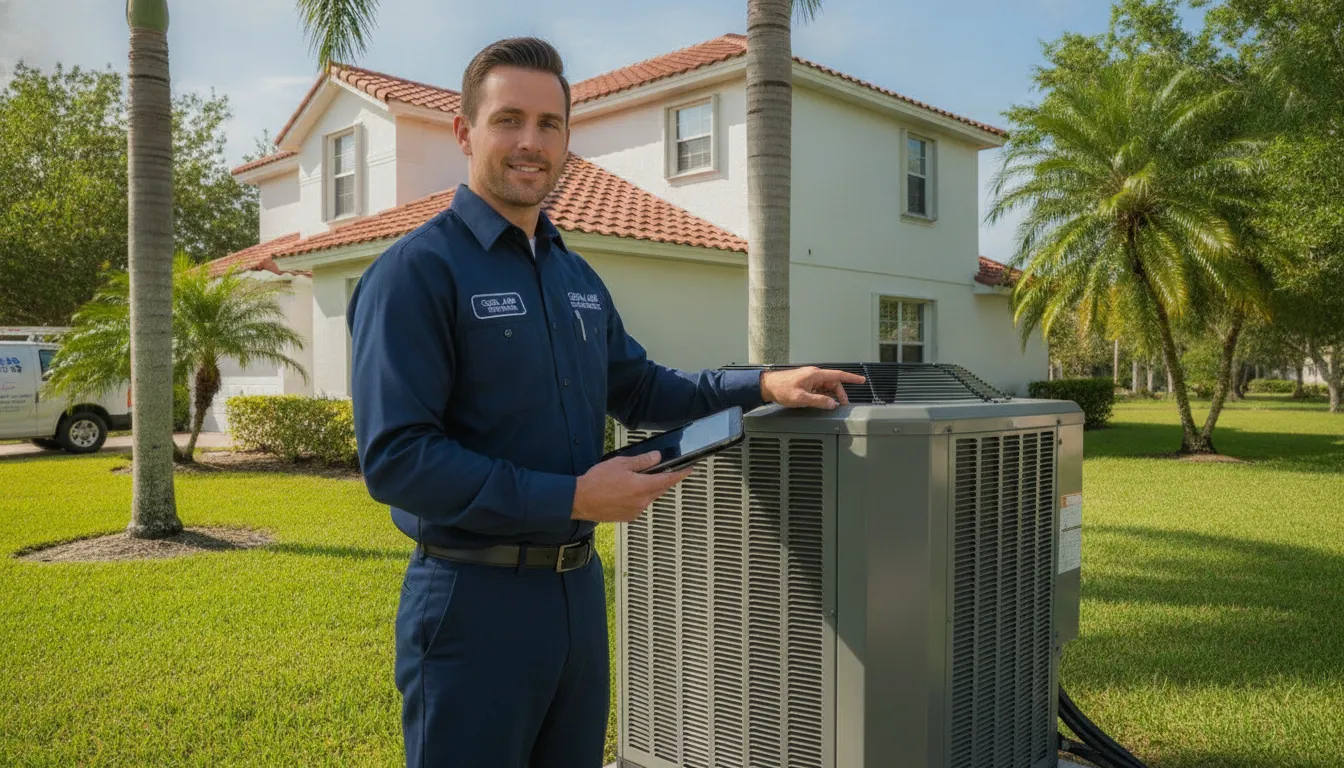
Your air conditioning system has two critical fans: the indoor blower that circulates cool air and the outdoor fan that gets rid of heat. If the outdoor fan stops working, your AC can't do its job. You’ll notice your ac is running but the fan is not spinning, and your home won’t cool down. In our climate, this is an emergency. The strain can quickly destroy your compressor, turning a simple fix into a major replacement. Understanding why the fan has stopped is key to protecting your system. This guide breaks down the likely causes, from simple blockages to failed electrical parts.
Key Takeaways
- Perform a safe self-check first: Always turn off the power at the breaker and outdoor disconnect before doing anything. Once it's safe, you can check for simple issues like incorrect thermostat settings, a tripped breaker, or debris physically blocking the fan.
- Know when to call a professional: Certain symptoms are clear signals to stop and call for help. If you notice a burning smell, hear loud grinding or buzzing noises, or if the circuit breaker trips repeatedly, it's time for an expert to take over.
- Prevent problems with regular care: The best way to handle a fan failure is to prevent it from happening. Schedule annual professional maintenance to catch wearing parts early, and keep the area around your outdoor unit clear of leaves and debris to ensure proper airflow.
AC On, But Fan Isn't Spinning? Here's What It Means
You hear the familiar click of your air conditioner turning on, but a few minutes later, you realize your home isn't getting any cooler. A quick look at your outdoor unit confirms your suspicion: the fan blades are completely still. When your AC is running but the fan isn't spinning, it’s a clear signal that something is wrong. Ignoring it won't just leave you sweating; it can lead to much bigger, more expensive problems down the road. Understanding what’s happening is the first step toward getting your cool air back.
Outdoor Fan vs. Indoor Blower: What's the Difference?
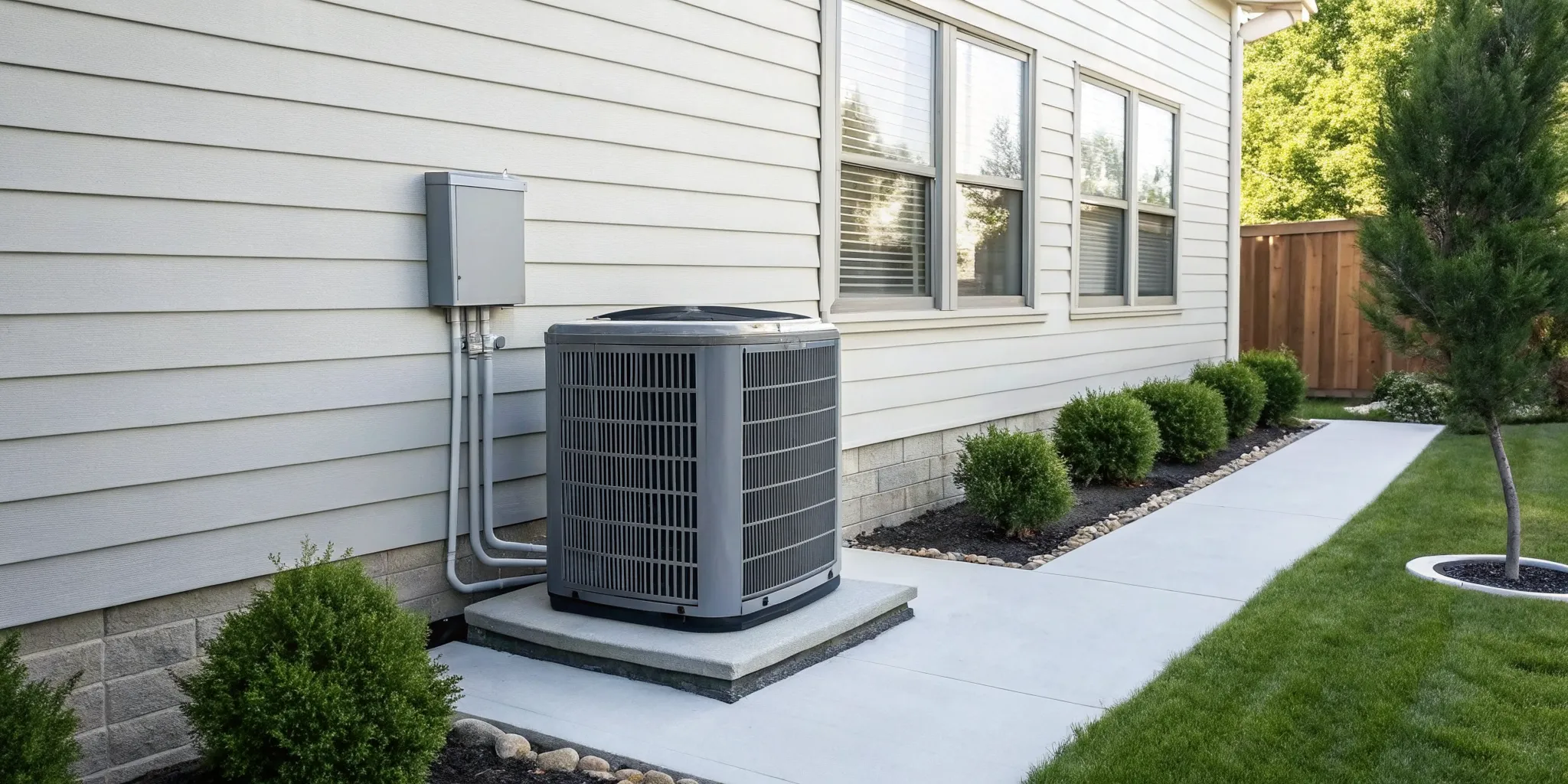
First, let's clarify which fan we're talking about. Your air conditioning system actually has two different fans, and both are critical for cooling your home. The indoor fan, often called the blower, is part of your indoor air handler unit. Its job is to blow the cooled air through your ductwork and into your living spaces. The outdoor fan is located in the condenser unit outside your house. This fan's purpose is to pull air over the condenser coils, helping to release the heat that was removed from your home's air. If either fan stops working, your AC can't complete its cooling cycle.
Why a Still Fan Is a Big Deal in the Florida Heat
In the relentless Florida heat, a non-spinning outdoor fan is more than an inconvenience; it's an emergency. If the outdoor fan isn't working, your system can't get rid of the heat it has collected from inside. This causes the compressor, the heart of your AC system, to work under extreme pressure and overheat. Running your AC with a broken fan can quickly destroy the compressor, and replacing it can sometimes be as expensive as a whole new system. That's why it's so important to address the issue immediately instead of hoping it will fix itself. A quick response can prevent a minor issue from turning into a costly air conditioning repair.
5 Common Reasons Your AC Fan Stopped Spinning
When your AC fan gives up, it’s usually due to one of a handful of common culprits. Some are simple enough to check yourself, while others are a clear sign you need a professional technician. Understanding what might be wrong is the first step toward getting your cool air back. Let's walk through the five most frequent reasons your fan might have stopped spinning, so you can figure out your next move.
A failed capacitor
Think of the capacitor as a small battery that gives your fan motor the jolt it needs to get started. When it fails, the motor doesn't get that initial push, and the fan blades won't move. A classic sign of a bad capacitor is a humming or buzzing sound coming from your outdoor unit. The AC is trying to work, but the fan motor is stuck. While you might see videos online about jump-starting the fan with a stick, this is risky. A failed capacitor is a common issue our team handles, and it's a quick fix for a trained technician. If you suspect this is the problem, it's best to call for a professional air conditioning repair to get it replaced safely.
A burnt-out fan motor
The fan motor is the workhorse that physically spins the blades. Like any motor, it can wear out over time or overheat and burn out, especially under the strain of constant Florida heat. If the motor is the problem, you might hear grinding or squealing noises before it fails completely. An even bigger red flag is a distinct burning smell coming from your outdoor unit. A burnt-out motor is a serious mechanical failure and a definite fire hazard. This isn't a DIY project. If you notice these signs, turn off your AC at the breaker immediately and call for help. A professional can diagnose the motor and determine if it needs a full replacement.
A tripped circuit breaker or blown fuse
Sometimes, the solution is simpler than you think. Your AC unit is on a dedicated circuit, and a power surge or an electrical fault can cause the breaker to trip, cutting power to the unit as a safety measure. Before you panic, head to your home's electrical panel and look for a breaker switch that's in the "off" or middle position. You can try flipping it back to "on." However, if the breaker trips again right away, don't keep resetting it. This indicates a more serious electrical problem that needs professional attention. A recurring trip could signal an issue that requires emergency air conditioning services to prevent further damage.
Debris or blockages
Your outdoor condenser unit needs to breathe. In Florida, it’s easy for leaves, palm fronds, dirt, and grass clippings to get pulled into the unit and clog it up. Sometimes, a stick or other debris can physically jam the fan blades, preventing them from spinning. This can cause the motor to strain and overheat. Take a look at your outdoor unit. If you see a buildup of yard waste, you can clear it away (after turning the power off, of course). Keeping the area around your unit clear is a simple but effective way to prevent this problem. Regular air conditioning maintenance includes a thorough cleaning to stop these blockages before they cause a breakdown.
A faulty contactor
The contactor is an electrical switch inside your outdoor unit. When your thermostat calls for cool air, the contactor closes the circuit, sending power to the fan motor and compressor. These components can wear out from repeated use, get pitted, or even attract ants that get fried and cause a short. If the contactor is faulty, the fan motor never gets the signal to start, even if the rest of the system is trying to run. You might hear a faint click from the unit, but nothing else happens. Replacing a contactor involves working with high-voltage wiring, making it a job best left to a licensed technician to ensure it's done correctly and safely.
A Step-by-Step Guide to Safely Diagnose Your AC Fan
When your AC fan gives up, it can feel like a major crisis, especially in the Florida heat. But before you panic, there are a few simple and safe diagnostic steps you can take. Sometimes, the fix is surprisingly easy. For more complex issues, gathering some information can help you have a more productive conversation with a technician. This guide will walk you through the process, focusing on safety above all else. Remember, these steps are for diagnosis, not complex repairs. If you ever feel unsure or the problem seems serious, it’s always best to call a professional for air conditioning repair. Your safety and the health of your AC system are what matter most.
What you'll need
You don’t need a full toolbox for these initial checks. Most of what you’ll need is already around your house. Grab a flashlight for better visibility, a pair of sturdy gloves to protect your hands from sharp edges and debris, and a long, thin object like a stick or a wooden dowel for the fan nudge test. While professional technicians use tools like a digital multimeter to test electrical components, we’re going to stick to visual and auditory checks you can perform safely. The goal here is to identify obvious issues without getting into complex electrical work, which should always be left to a licensed technician.
Safety first: Before you begin
I can't stress this enough: your safety is the top priority. Air conditioning units are powerful electrical appliances connected to your home’s high-voltage system. Before you touch, inspect, or clean any part of your outdoor unit, you must completely cut off its power supply. Skipping this step can lead to serious injury or even electrocution. Even if you think the problem is minor, never take a chance. Always assume the unit is live until you have personally and completely disconnected the power at its sources. This one rule is non-negotiable for any kind of DIY AC inspection.
Step 1: Turn off all power to your AC unit
To be absolutely sure the unit is de-energized, you need to turn it off in two places. First, go to your home’s main electrical panel (the circuit breaker box) and find the breaker labeled for your AC or air handler. Flip it to the “Off” position. Next, head outside to the condenser unit. There should be a metal disconnect box mounted on the wall nearby. Open the box and either pull the disconnect plug out or flip the switch to “Off.” This two-step process ensures no electricity can reach the unit, making it safe for you to inspect.
Step 2: Check your thermostat settings
This might sound too simple, but you’d be surprised how often the solution is right on the wall. A wrong setting on your thermostat can prevent the fan from running. Go to your thermostat and make sure it’s set to “Cool.” Then, check the set temperature. It needs to be lower than the current room temperature to signal the air conditioner to turn on. If the set temperature is higher than the room’s temperature, the AC has no reason to run. Try lowering it by at least five degrees and wait a few minutes to see if the fan kicks on.
Step 3: Inspect the circuit breaker
If your thermostat settings are correct, the next stop is your home’s electrical panel. A sudden power surge could have tripped the breaker connected to your AC unit. Look for a switch that is in the “Off” position or stuck in the middle between “On” and “Off.” To reset it, you must first push the breaker firmly to the “Off” position, and then flip it back to “On.” If the breaker immediately trips again, do not try to reset it a second time. This indicates a more serious electrical problem that requires a professional diagnosis from a company like 5 Star Air.
Step 4: Clear away debris from the outdoor unit
Your outdoor condenser unit needs plenty of space to breathe. Over time, leaves, grass clippings, dirt, and even animal nests can build up around and inside the unit, physically blocking the fan blades. With the power safely off, put on your gloves and clear away any visible obstructions from the top and sides of the unit. You can use a garden hose (on a gentle setting) to rinse away dirt from the fins, but be careful not to bend the delicate metal. Keeping this area clear is a key part of regular air conditioning maintenance and can prevent future fan issues.
Step 5: Perform the "fan nudge" test
With the power still off, this test can help you determine if the problem is a bad capacitor. The capacitor provides the initial jolt of energy needed to get the fan motor started. Find a long, thin object like a stick (never use your hands!) and carefully reach through the grate to give one of the fan blades a gentle push. If the fan starts spinning freely and continues for a bit, the motor is likely fine, but the capacitor is probably failing. If the fan is stiff and hard to move, the motor itself may have seized.
Step 6: Look for a damaged capacitor
If the nudge test suggests a capacitor issue, you can do a quick visual inspection. Again, make sure the power is off. The capacitor is a small, can-shaped component, usually silver or black, located inside the access panel of your outdoor unit. Look for any signs of failure, such as a bulging or swollen top, or any fluid leaking from the casing. A humming or buzzing sound from the unit when it’s trying to start is another classic symptom of a bad capacitor. Capacitor replacement involves handling high-voltage components and should only be performed by a trained professional.
Step 7: Listen and smell for serious warning signs
Your senses can tell you a lot about what’s wrong with your AC. If you hear a loud humming or buzzing from the outdoor unit but the fan isn’t moving, it’s a clear sign of an electrical issue, likely with the capacitor or motor. Grinding or screeching noises could mean a problem with the motor’s bearings. Pay attention to smells, too. A burning smell is a major red flag that a component is overheating and failing. If you notice any of these serious signs, don't try any more troubleshooting. It's time to call for emergency air conditioning services right away.
When to Call a Professional
While it’s empowering to tackle some home repairs, certain AC issues are best left to the experts. If your troubleshooting doesn't solve the problem, or if you feel even slightly unsure about what to do next, it’s a clear sign to call for backup. A professional technician can diagnose the root cause safely and accurately, saving you time and stress. Remember, there’s no shame in calling for help; it’s the smartest move when dealing with a system as crucial as your air conditioner.
Signs the problem is beyond a DIY fix
If your DIY diagnosis points to a specific part failure, it’s time to put the tools down. Issues like a bad capacitor, a burnt-out motor, or damaged fan blades require professional expertise. While you might be able to identify these problems, replacing them correctly involves handling high-voltage electrical components. A certified technician can not only replace the part safely but also ensure it’s the right one for your system. If your circuit breaker keeps tripping even after you reset it, this indicates a deeper electrical problem that needs immediate professional AC repair. Don't risk it; let an expert handle the technical work.
Red flags: Burning smells, loud noises, and tripped breakers
Your senses are your best first alert system. If you notice a burning smell coming from your vents or the outdoor unit, turn the AC off immediately. This often signals a failing motor or an electrical short. Likewise, loud or unusual noises like buzzing, grinding, or screeching are cries for help from your system. A persistent buzzing sound often points to a failing capacitor, while clanking could mean a loose part or a broken fan blade. These aren't just minor annoyances; they are serious warnings of impending failure. If you experience any of these red flags, it's critical to call for emergency air conditioning services.
The dangers of running a broken AC in Florida
In Florida, a fully functional air conditioner isn't a luxury; it's a necessity. Continuing to run your AC when the fan isn't working can cause the compressor, the heart of your system, to overheat. A damaged compressor is one of the most expensive repairs you can face, sometimes costing nearly as much as a full air conditioning replacement. Ignoring the problem won't make it go away. Instead, it will likely turn a manageable repair into a major system breakdown, leaving you without cool air when you need it most. Addressing the fan issue promptly protects your investment and ensures your home remains a comfortable escape from the Florida heat.
How to Prevent Future Fan Problems
Dealing with a broken AC fan is stressful, especially when the Florida sun is beating down. The good news is that you can take a few simple, proactive steps to keep your system running smoothly and prevent many common fan problems from happening in the first place. A little bit of care goes a long way in avoiding costly repairs and ensuring your home stays cool and comfortable. Think of it as preventative medicine for your air conditioner. By staying on top of maintenance, you can catch small issues before they turn into major headaches.
Schedule regular AC maintenance
The single most effective way to prevent future fan issues is to schedule professional maintenance at least once a year. Think of it as a wellness check for your air conditioner. During a tune-up, a qualified technician does more than just glance at your unit; they perform a comprehensive inspection of the entire system. They will clean critical components, check electrical connections, and test parts like the capacitor and fan motor, which are often the culprits in fan failures. This allows them to spot and fix wear and tear before it leads to a breakdown. Regular air conditioning maintenance not only extends the life of your unit but also ensures it runs as efficiently as possible, saving you money on energy bills.
Keep your outdoor unit clear all year
Here’s a simple task you can do yourself that makes a huge difference. Your outdoor AC unit needs room to breathe. When it’s crowded by plants, leaves, dirt, or other debris, it can’t pull in enough air. This forces the fan motor to work harder than it should, leading to overheating and premature failure. Make it a habit to walk around your unit and clear away any obstructions. We recommend keeping a two-foot clearance on all sides. In Florida, with our lush landscapes and occasional storms, it’s a good idea to check on it weekly. A quick sweep can prevent a future call for air conditioning repair and keep your system running efficiently.
Learn the early warning signs
You know your home better than anyone, so you’re the first line of defense against AC problems. Pay attention to the sounds and smells coming from your unit. For example, if you hear a humming noise but the fan isn't moving, it often points to a bad capacitor. A burning smell is a more serious red flag that could indicate a failing motor. Other warning signs include the fan spinning slower than usual, rattling or grinding noises, or your AC cycling on and off more frequently. Catching these issues early is key. If you notice anything out of the ordinary, don't wait for it to get worse. Addressing these signs promptly can often prevent a complete system breakdown, especially when you need it most.
Related Articles
- 5 Signs Your AC Needs Repair
- AC Repair Services
- AC Services
- Duct Replacement Services
- HVAC Services in Southwest Florida
Frequently Asked Questions
My AC is still making noise, but the fan isn't moving. Is it safe to leave it on? No, you should turn the system off immediately at both the thermostat and the circuit breaker. The noise you hear is likely the compressor, which is the heart of your AC system. Without the fan running to release heat, the compressor will quickly overheat and can suffer catastrophic failure. Leaving it on is the fastest way to turn a relatively small repair into a very expensive system replacement.
I tried the "fan nudge" test and the blades started spinning. Does this mean it's fixed? This is a great diagnostic clue, but it doesn't mean the problem is solved. If a gentle push gets the fan moving, it strongly suggests the capacitor has failed. The capacitor provides the initial jolt of energy to get the motor started. While the fan might run for a while after you push it, it won't be able to start on its own during the next cooling cycle. You'll need a professional to safely replace the faulty capacitor.
Why is regular maintenance so important if my AC seems to be working fine most of the time? Think of it like getting an oil change for your car. Your car might run without it for a while, but you're risking major engine damage. Professional AC maintenance allows a technician to clean essential parts, test electrical components like the fan motor and capacitor, and spot signs of wear before they cause a breakdown on a hot Florida afternoon. It’s the most effective way to ensure your system runs reliably and efficiently.
My circuit breaker tripped once, and after I reset it, the AC worked. Should I still be worried? If it happened just once, it could have been caused by a random power surge in your area. You don't necessarily need to panic, but you should pay attention. If the breaker trips a second time, turn the AC off and do not reset it again. A recurring trip is a clear signal of an underlying electrical problem in your AC system that needs to be diagnosed by a professional to prevent a fire hazard or further damage.
Can I just clean the outdoor unit myself instead of calling a professional? You can and should perform basic cleaning. Regularly clearing away leaves, grass clippings, and other debris from around your outdoor unit is a fantastic habit that helps your system breathe. However, professional maintenance involves a much deeper cleaning of internal components, like the delicate condenser coils, and includes a full inspection of all electrical and mechanical parts. This comprehensive check is something that should only be done by a trained technician.