Why Did My AC Suddenly Stop Working? 7 Causes
An air conditioner that suddenly stops is doing more than just leaving you in the heat; it's often trying to tell you something. Your AC unit has several built-in safety mechanisms designed to shut the system down to protect its most vital components, like the compressor. So, when you’re asking, "why did my ac suddenly stop working?" the answer is often that it’s protecting itself from more severe damage. Issues like a clogged drain line causing water to back up or a dirty outdoor unit causing it to overheat will trigger an automatic shutdown. Understanding these common triggers will help you identify what’s wrong, whether it’s a simple maintenance task or a sign you need an expert to prevent a bigger failure.
Key Takeaways
- Start with the basics: Before calling for help, check for simple problems you can often fix yourself, such as a tripped circuit breaker, incorrect thermostat settings, or a dirty air filter.
- Embrace preventative maintenance: The best way to avoid a sudden failure is through consistent care; this includes changing your filter regularly, keeping the outdoor unit clear, and scheduling an annual professional tune-up.
- Recognize serious warning signs: Do not ignore symptoms that require an expert, including strange noises, burning smells, or a repeatedly tripping breaker, as these indicate a need for immediate professional repair.
Why Did My AC Suddenly Stop Working?
There’s nothing quite like that moment of dread when you realize your house is getting warmer and the familiar hum of the air conditioner has gone silent. Especially here in Florida, a broken AC is more than an inconvenience; it’s an emergency. Before you panic, take a deep breath. The cause might be something you can fix yourself in just a few minutes. An AC system that suddenly stops working is often a sign that one of its safety features has been triggered to prevent more serious damage.
From a simple tripped breaker to a clogged filter, many common issues have straightforward solutions. We’re going to walk through the seven most frequent reasons your AC might have quit on you. By checking a few key things, you can diagnose the problem and figure out if it’s a quick DIY fix or if it’s time to call in a professional. Understanding what’s going on will help you get your cool air back faster and prevent the issue from happening again. If you run through these checks and still can't find the source of the problem, our team is always ready to provide emergency AC services to get your home comfortable again.
Tripped circuit breaker
Before you assume the worst, your first stop should be your home’s electrical panel. Your air conditioning system is a powerful appliance that uses a lot of electricity, so it has its own dedicated circuit breaker. A sudden power surge or an overworked system can cause this breaker to trip, cutting off power as a safety measure. Find your electrical panel and look for a switch that is in the "off" position or stuck in the middle. To reset it, flip the switch completely to the "off" position and then firmly back to "on." If the AC kicks back on, you’re all set. If the breaker trips again right away, leave it off and call a professional. A repeatedly tripping breaker signals a deeper electrical issue that needs an expert diagnosis.
Thermostat issues
Sometimes the problem isn't with your AC unit at all, but with the device that tells it what to do: your thermostat. This is another simple check that can save you a lot of headache. First, make sure the thermostat is set to "Cool" and that the target temperature is set several degrees below the current room temperature. If the screen is blank, the batteries may have died, so try replacing them. A simple battery swap is often all it takes to get things running again. Also, check that the fan setting is on "Auto," not "On," which would cause the fan to run continuously even when the air isn't being cooled. If these adjustments don't work, the thermostat itself might have failed.
Clogged air filter
A dirty air filter is one of the most common culprits behind an AC that suddenly stops working. When the filter gets clogged with dust, pet dander, and other debris, it severely restricts airflow to the indoor unit. Your system has to work much harder to pull air through, which can cause the evaporator coils to get too cold and freeze over. This layer of ice blocks airflow even more, and eventually, a safety switch will shut the entire system down to prevent damage to the compressor. Checking and changing your air filter regularly is a critical part of air conditioning maintenance and can prevent this exact scenario.
Frozen evaporator coils
If you notice a layer of ice on the copper tubing of your indoor AC unit, you’ve found a clear sign of trouble. These are your evaporator coils, and they should be cold, but never frozen. As we just covered, the most common cause is a dirty air filter restricting airflow. Another likely reason is a low level of refrigerant. When the coils freeze, your AC can't cool your home and will eventually shut down. If you see ice, turn your AC system off completely (but leave the fan running on "On" at the thermostat) to allow the ice to melt. Once it's thawed, you can try changing the air filter. If it freezes again, you likely have a refrigerant issue that requires professional air conditioning repair.
Refrigerant leak
Refrigerant is the lifeblood of your air conditioner; it’s the chemical compound that absorbs heat from your home and releases it outside. Your AC is a closed-loop system, so you should never "run out" of refrigerant. If the level is low, it means there’s a leak somewhere. Signs of a leak include your AC blowing warm air, a hissing sound near the unit, or evaporator coils that keep freezing over. Handling refrigerant is not a DIY job. It requires special equipment and an EPA certification. If you suspect a leak, it’s important to call a licensed technician to find and fix it, then recharge the system to the correct level.
Blocked condensate drain line
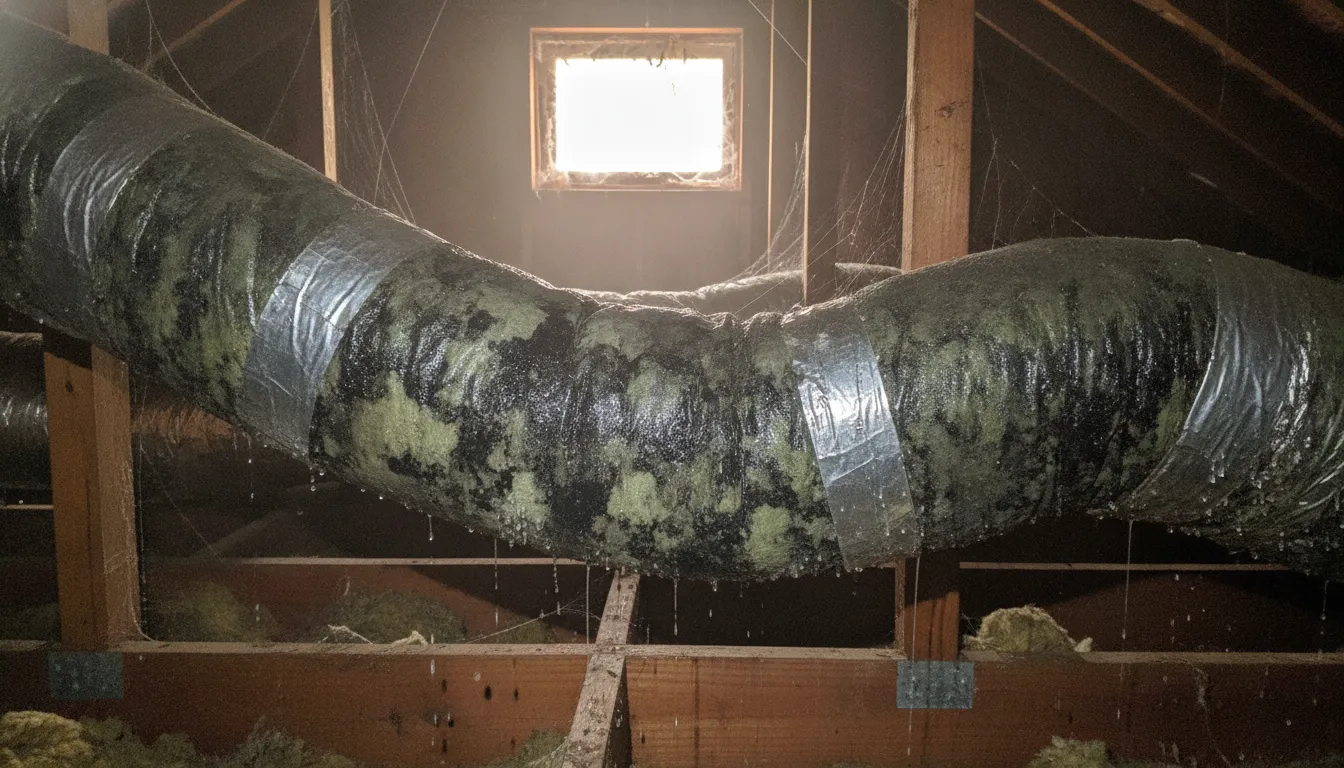
Your AC doesn't just cool the air; it also removes humidity. That moisture is collected and funneled outside through a pipe called the condensate drain line. Here in humid Florida, it’s easy for algae, mold, and sludge to build up and create a clog in this line. Most modern AC units have a safety float switch that detects when water is backing up. To prevent water from overflowing and causing damage to your home, this switch will automatically shut off your entire AC system. Clearing a blocked drain line can sometimes be done yourself, but a thorough cleaning by a professional during routine maintenance is the best way to prevent it from happening in the first place.
Dirty outdoor unit
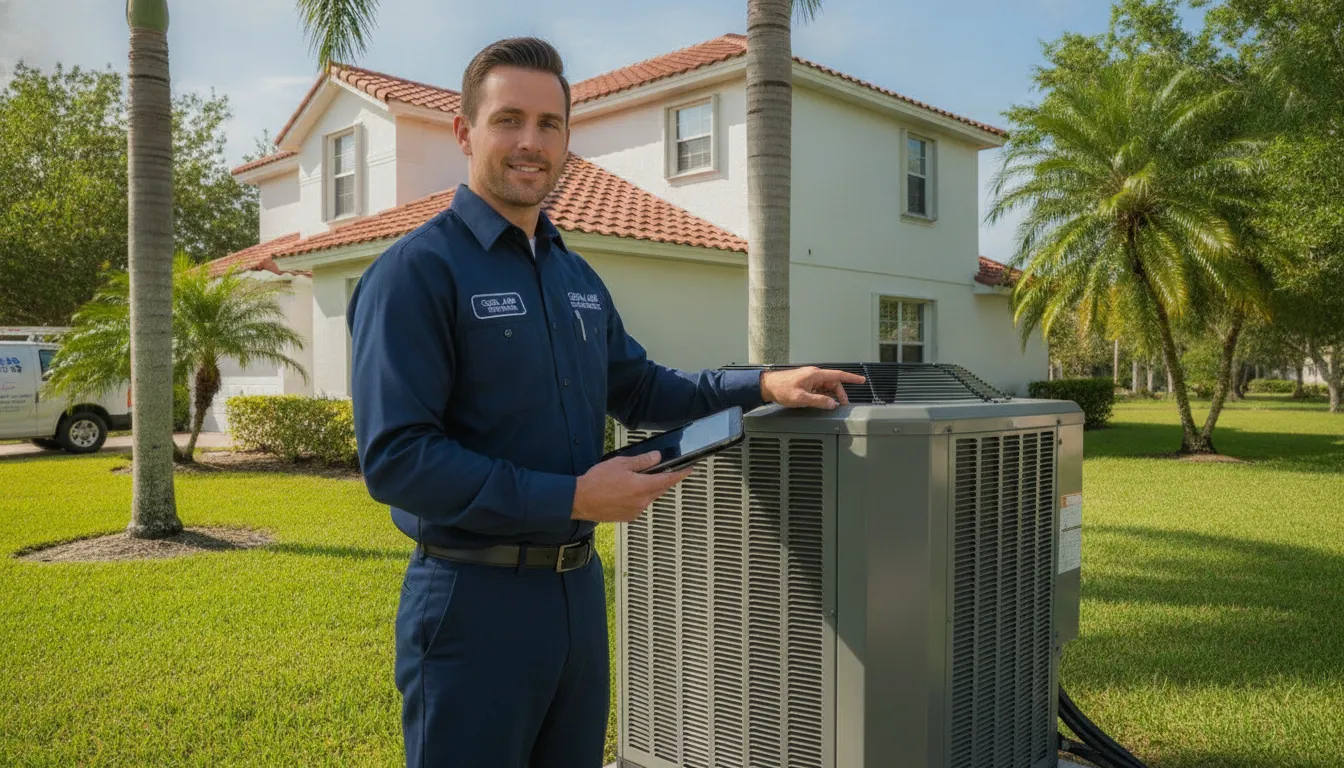
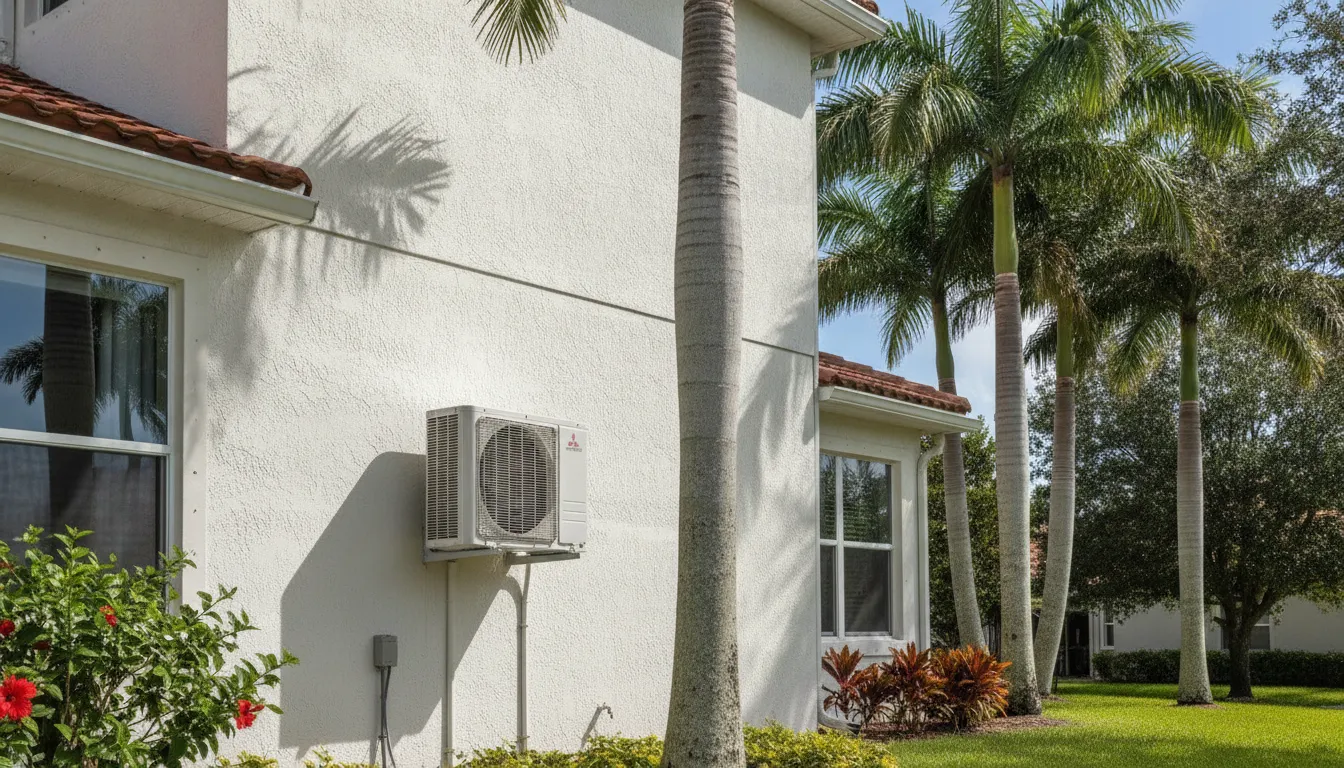
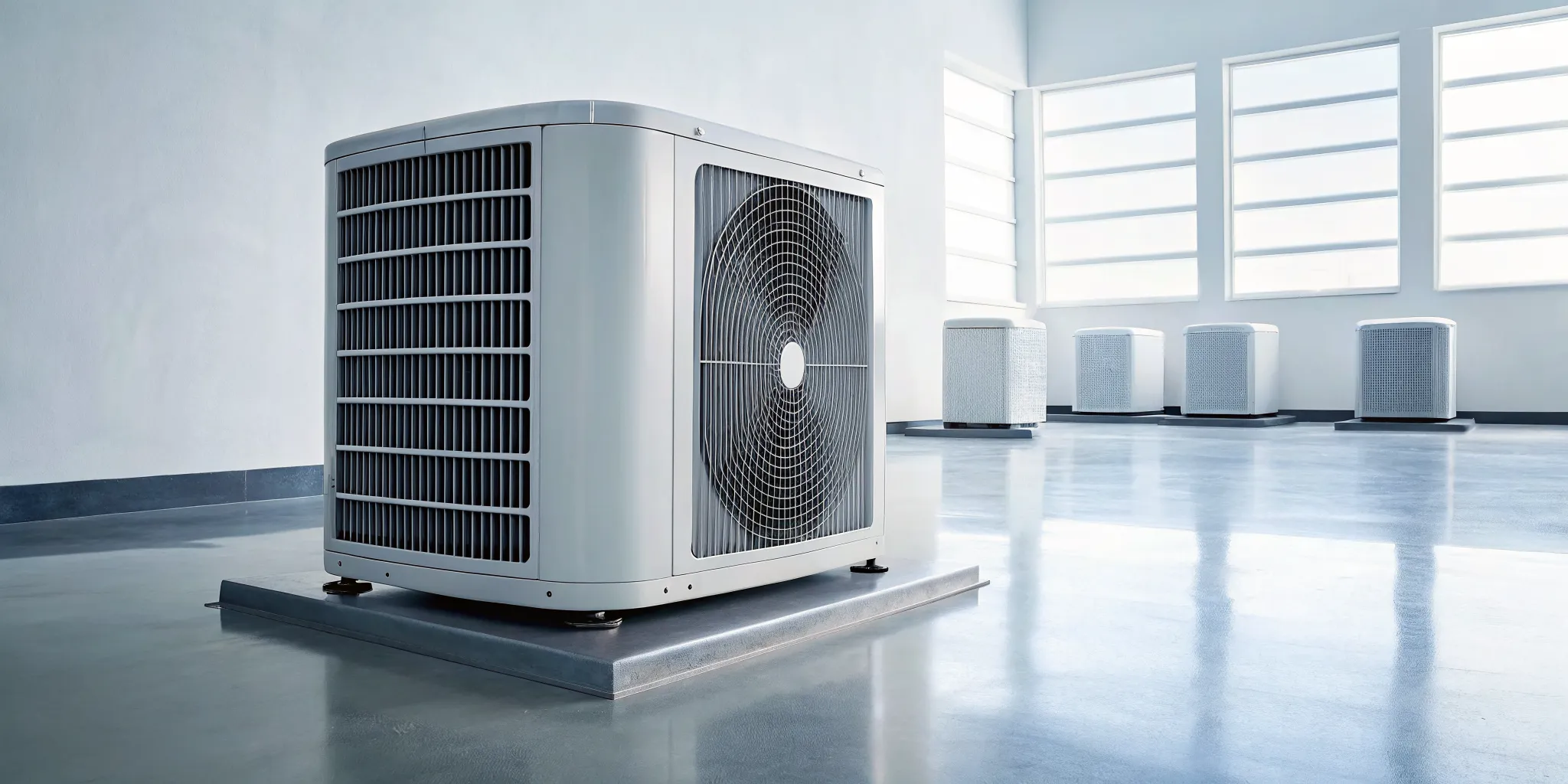
Your AC system has two main parts: the indoor unit and the outdoor unit (the condenser). The outdoor unit's job is to release all the heat it has pulled from your home. To do this effectively, it needs plenty of clear airflow. If the unit is covered in dirt, grass clippings, or leaves, or if it's crowded by bushes and weeds, it can't breathe. The system will struggle to release heat, causing it to overheat and shut down to protect the compressor from damage. You can gently rinse the unit with a garden hose to clear away debris. However, if the fan on top of the unit isn't spinning when the AC is on, you could have a failed motor, which requires a professional repair.
What to Check Before You Call for AC Repair
When your AC gives out, especially in the thick of a Florida summer, the first instinct is often to panic. But before you pick up the phone, take a deep breath. Sometimes, the solution is surprisingly simple and something you can safely check yourself without any special tools. Walking through a few basic troubleshooting steps can potentially save you time and the cost of a service call for a minor issue. Even if these steps don't solve the problem, you're not wasting your time. By ruling out the simple stuff, you gather valuable information that helps a professional technician diagnose the real issue much faster once they arrive. Think of it as a bit of detective work that can get your cool air back on sooner. This checklist is designed for any homeowner, giving you the confidence to tackle the most common culprits behind a sudden AC shutdown. Let's go through a simple, six-step process you can use to see if you can get your system running again before calling for backup.
Step 1: Check your circuit breaker
It might sound too simple, but your AC may have tripped its circuit breaker. This is a built-in safety feature that protects the unit from electrical surges. Head to your home's main electrical panel (it’s usually in a garage, closet, or utility room) and look for the breaker labeled for your "AC" or "HVAC." A tripped breaker will be in the middle position or shifted to "off." To reset it, you need to push the switch firmly to the full "off" position first, then flip it back to "on." If the breaker trips again immediately, leave it off and call for professional air conditioning repair; this indicates a more serious electrical issue.
Step 2: Check your thermostat settings
Next, let's look at the command center for your cooling system: the thermostat. It’s easy for settings to get bumped or changed by mistake. First, make sure the thermostat is set to "Cool." Then, check the temperature setting. It needs to be set lower than the current temperature in the room for the AC to kick on. If your thermostat has a blank screen, the batteries may have died. Try swapping them out with a fresh pair. If these simple adjustments don't solve the problem, it’s possible the thermostat itself has failed, but it’s always best to rule out the easy fixes first.
Step 3: Inspect your air filter
Your AC system needs to breathe, and a dirty air filter is like trying to run a marathon while breathing through a straw. A clogged filter severely restricts airflow, which can cause the indoor unit’s coils to get too cold and freeze over, shutting down your entire system. Find the filter (usually in a slot by your indoor air handler or in a return air vent) and slide it out. If it’s covered in a thick blanket of dust and debris, it’s time for a replacement. Keeping a clean filter is a critical part of regular air conditioning maintenance and essential for system health and efficiency in dusty Florida homes.
Step 4: Look for ice on the coils
If you’ve replaced your filter and the system still isn't cooling, check for ice. You’ll need to look at the evaporator coils on your indoor air handler unit. A layer of ice or frost is a definite sign that something is wrong. As we mentioned, this can be caused by a clogged air filter restricting airflow. However, it’s also a classic symptom of low refrigerant. Low refrigerant almost always means there is a leak somewhere in the system. This isn't a DIY fix, as handling refrigerant requires special tools and certification. If you see ice, turn the system off to let it thaw and call a professional for an emergency AC service.
Step 5: Check the condensate drain line
Your air conditioner doesn't just cool the air; it also removes a lot of humidity. This moisture is collected in a drain pan and funneled outside through a condensate drain line. If this line gets clogged with algae or debris, the water backs up. Most modern systems have a safety float switch that will shut the entire AC unit down to prevent water from overflowing and causing damage to your home. You can check the drain pan near your indoor unit to see if it’s full of water. While you can sometimes clear a minor clog near the outlet yourself, a recurring issue points to a bigger problem that needs a professional cleaning.
Step 6: Clear the outdoor unit
Your AC system has two main parts: an indoor unit and an outdoor unit. The outdoor unit, or condenser, is responsible for releasing all the heat it has removed from your home. To do this effectively, it needs plenty of airflow. Go outside and take a look. In Florida, it’s common for palm fronds, leaves, grass clippings, and dirt to build up around the unit. Make sure there are at least two feet of clear space around the entire condenser. Gently clear away any visible debris. For safety, it's best to turn the power off at the circuit breaker before you start cleaning around the unit.
Is My Thermostat the Problem?
Your thermostat is the command center for your entire cooling system, so it’s one of the first places you should look when your AC stops working. It’s often the source of the problem, and thankfully, the fix can be incredibly simple. Before you start worrying about a major system failure, it’s worth spending a few minutes checking the thermostat. These quick troubleshooting steps will help you determine if a simple setting is off or if the thermostat itself has failed, preventing it from telling your AC unit what to do.
Think of it as the brain of the operation. If the brain isn't sending the right signals, the rest of the body won't respond correctly. The same goes for your AC. A faulty setting, dead batteries, or a malfunctioning unit can leave you with a silent, non-working air conditioner, which is the last thing anyone wants in the Florida heat. By running through a few basic checks, you can quickly rule out the thermostat as the issue or, even better, solve the problem yourself in just a few minutes. We'll cover everything from simple setting adjustments to recognizing the signs of a failed unit. Let's walk through exactly what to look for.
Set it to "cool" and lower the temperature
This might sound a little too obvious, but you’d be surprised how often this is the issue. It’s easy for settings to get changed accidentally, especially in a busy household. First, make sure your thermostat is switched to the "Cool" setting. Next, check the temperature. Your air conditioner is designed to turn on only when the room temperature is higher than the temperature you’ve set. Try lowering the set temperature by at least five degrees and give it a minute. If you hear your system kick on, you’ve just solved the problem without breaking a sweat.
Replace the batteries
If your thermostat’s digital screen is completely blank, the first thing to suspect is dead batteries. Many thermostats rely on battery power to function and send signals to your AC unit. When those batteries die, the communication stops, and your system won't get the message to start cooling. Most thermostat covers pop right off, allowing you to easily swap in a fresh set. Even if the screen isn't totally blank, low batteries can cause strange issues, so replacing them is a great troubleshooting step. It’s always a good idea to keep spare batteries on hand, especially for our long, hot Florida summers.
Check the fan setting
Is air coming out of your vents, but it doesn't feel cold? Take a look at your thermostat’s fan setting. You’ll typically see two options: "On" and "Auto." If the fan is set to "On," it will run constantly, circulating air even when the air conditioner isn't actively cooling. This can make it seem like your AC is working when it’s not. For normal operation, your fan should be set to "Auto." This ensures the fan only runs when your system is in a cooling cycle. Switching to "Auto" will help you confirm whether your AC is actually cooling or just moving warm air around.
Signs your thermostat has failed
If you’ve checked the settings and replaced the batteries but your AC still isn’t working, the thermostat itself might be the problem. These devices don't last forever. A key sign of failure is a screen that remains blank or unresponsive after you’ve put in new batteries. Other symptoms include the AC not turning on at all or "short cycling," which is when the system turns on and off in rapid succession. When your thermostat can no longer communicate with your AC, your home simply won't cool down. If you suspect a faulty thermostat, it’s time for a professional air conditioning repair to get things working correctly.
Can a Dirty Air Filter Really Shut Down My AC?
Yes, a dirty air filter can absolutely shut down your AC. It might seem like a small thing, but a clogged filter is one of the most frequent reasons for an air conditioner to stop working. It forces your entire system to work harder than it should, leading to a total shutdown when you need it most. When your AC quits, the filter is one of the first places you should look. Understanding how this happens, how often to change your filter in Florida, and which filter to use can save you from a hot house and an unnecessary service call.
How a clogged filter stops your system
Think of your AC trying to work with a clogged filter like you trying to breathe through a thick blanket. It just can’t get enough air. A heavily clogged filter restricts airflow, which puts a huge strain on your system. This lack of airflow can cause the evaporator coils inside your unit to get too cold and freeze over. Once the coils are a block of ice, air can't pass through to be cooled, and your AC will stop blowing cold air. To prevent serious damage, a safety switch will often shut the entire system down. A dirty filter also means dust and allergens are no longer being properly removed, which can seriously affect your home’s indoor air quality.
How often to change your filter in Florida
Here in Florida, our air conditioners work overtime. The combination of high humidity, pollen, and dust means filters get dirty fast. A good rule of thumb is to check your filter every 30 days and replace it at least every 90 days. However, you’ll need to change it more often if you have pets, someone in your home has allergies, or you live near a construction site. Even a small home project that creates dust, like sanding drywall, can clog a filter quickly. Sticking to a schedule not only prevents shutdowns but also helps your system run more efficiently, saving you money on energy bills. If you'd rather not worry about it, scheduling regular air conditioning maintenance ensures a professional handles it for you.
Choose the right filter for your home
When you go to buy a new filter, you’ll see a lot of options. The key is to choose the right one for your specific system. Filters are rated using the MERV scale (Minimum Efficiency Reporting Value). While a higher MERV rating means the filter can trap smaller particles like pollen and bacteria, it also means the filter is denser and more restrictive to airflow. Using a filter with a MERV rating that is too high for your system can cause the same problems as a clogged filter. Check your AC unit’s manual for the manufacturer's recommendation. If you’re not sure, it’s better to use a standard filter than to risk choking your system. If you've replaced the filter and still have issues, it’s time to call for professional air conditioning repair.
Is It a Refrigerant or Electrical Issue?
When your AC suddenly gives up, it’s easy to feel overwhelmed. After you’ve checked the simple things like the thermostat and filter, the problem might be more complex. Often, a sudden shutdown points to either a refrigerant leak or an electrical failure. While both of these issues sound serious (and they are), understanding the warning signs can help you explain the problem to a technician and know what to expect. Let's look at the distinct symptoms of each so you can get a better idea of what’s happening inside your unit. Remember, both refrigerant and electrical problems are jobs for a professional, so this is about diagnosing the situation, not fixing it yourself.
Warning signs of a refrigerant leak
If your air conditioner is running but blowing warm or room-temperature air, a refrigerant leak is a likely suspect. Refrigerant is the lifeblood of your AC, absorbing heat from inside your home and releasing it outside. When the level is low, the system simply can’t cool the air effectively. You might also notice that your evaporator coils (the indoor ones) have frozen over, which can happen when refrigerant is low. A common misconception is that AC units "use up" refrigerant like a car uses oil. This isn't true. Your AC has a sealed refrigerant system, so if it's low, it means there is a leak somewhere that needs to be found and fixed.
Symptoms of an electrical problem
Electrical issues often cause a more abrupt and total shutdown. If your AC won’t turn on at all, or if it trips the circuit breaker every time it tries to start, you’re probably looking at an electrical fault. This could be caused by a failed part inside the unit, like a capacitor that helps the motors start, or a contactor that sends power to the main components. If you reset the breaker and it immediately trips again, do not keep resetting it. This is a clear sign of a bigger electrical problem that requires immediate attention from a professional to prevent further damage or a potential fire hazard.
Why these issues require a pro
Tackling refrigerant leaks or electrical failures on your own is not only difficult but also dangerous. Handling refrigerant requires an EPA certification and specialized tools to safely manage the substance and accurately find and seal leaks. Messing with your home’s or your AC unit’s electrical system without proper training puts you at risk of serious injury from electric shock. For your safety and the health of your system, these are problems best left to a certified technician. A professional has the right equipment and expertise to diagnose the root cause and perform a lasting air conditioning repair, ensuring your system runs safely and efficiently.
When to Call a Professional for AC Repair
While you can handle some basic troubleshooting steps on your own, certain AC problems are clear signals that it’s time to put down the tools and pick up the phone. Trying to fix complex electrical or mechanical issues without proper training can be dangerous and often leads to more expensive damage. If you’ve gone through the basic checks and your air conditioner still isn’t working, or if you notice any of the following signs, it’s best to call a trusted professional. These symptoms usually point to a deeper problem that requires an expert diagnosis and specialized equipment to fix correctly and safely. At 5 Star Air, our technicians are fully licensed and insured, so you can feel confident that the job will be done right. We believe in honest, transparent service, which means we’ll explain the problem clearly without any sales pressure.
Your AC is making strange noises
Your air conditioner should operate with a consistent, low hum. If you start hearing something out of the ordinary, your system is trying to tell you something is wrong. Loud banging or clanking can indicate a loose or broken part, like a connecting rod or piston pin. Squealing sounds often point to issues with the motor bearings or a worn-out belt. A grinding noise is particularly serious and could mean a problem with the compressor's motor. Don't ignore these auditory warnings. Turn off your AC unit to prevent further damage and schedule a professional air conditioning repair to diagnose and fix the source of the sound.
The system cycles on and off constantly
If your AC turns on for a few minutes, shuts off, and then quickly turns back on again, it's a problem known as short cycling. This is incredibly inefficient, driving up your energy bills and putting excessive wear and tear on your system's components. While a dirty air filter can cause this, it often points to more complex issues like an oversized unit, low refrigerant levels, or a faulty thermostat. If you find the circuit breaker for the AC trips repeatedly, avoid the temptation to keep resetting it. This indicates a significant electrical problem that needs immediate attention from a licensed technician to prevent a fire hazard.
It's blowing weak or warm air
Nothing is more frustrating than an AC that’s running but not cooling. If the air coming from your vents feels weak or warm, first check your air filter to make sure it isn’t clogged. If the filter is clean, you could be dealing with a more serious issue. Warm air often means your system is low on refrigerant, which typically signals a leak somewhere in the lines. Handling refrigerant is a job strictly for certified professionals. Weak airflow could also be caused by a failing fan motor or blocked ductwork. An expert can accurately pinpoint the cause and get cool air flowing again.
You smell burning or foul odors
Unpleasant smells coming from your vents should never be ignored. A burning odor is a major red flag for an electrical problem, such as overheated wiring or a failing motor. If you smell something burning, turn off your AC at the circuit breaker immediately and call for emergency service. A musty or moldy smell suggests that water is pooling somewhere it shouldn't be, often due to a clogged condensate drain line. This creates the perfect environment for mold and mildew to grow, which can then be circulated throughout your home. This not only smells bad but can also impact your indoor air quality.
Your energy bill suddenly spikes
Your monthly energy bill is a good indicator of your AC's health. If you notice a sudden, unexplained spike in your electricity costs, your air conditioner is likely the culprit. This means the system is working much harder than it should to cool your home, a classic sign of inefficiency. The underlying cause could be anything from a slow refrigerant leak or a struggling compressor to dirty coils or aging components. Scheduling a professional inspection can identify the hidden issue, restore your system's efficiency, and prevent a small problem from turning into a complete system failure. Regular AC maintenance is the best way to keep your unit running efficiently.
Why fast repairs are a must in Florida
In Southwest Florida, a working air conditioner is a necessity, not a luxury. When your AC suddenly stops working, the heat and humidity can make your home uncomfortable and even dangerous within hours. For households with children, elderly family members, or pets, a malfunctioning AC can quickly become a health risk. High indoor humidity also creates an ideal breeding ground for mold and mildew. That’s why prompt repairs are so important. Many companies offer same-day service because they understand the urgency. Don't wait for the problem to get worse; calling for emergency air conditioning services will restore comfort and safety to your home.
How to Prevent Your AC From Suddenly Quitting
An ounce of prevention is worth a pound of cure, especially when it comes to your air conditioner in the middle of a Florida summer. A sudden AC failure is more than an inconvenience; it's an emergency. The good news is that you can take several proactive steps to keep your system running smoothly and avoid that dreaded moment when the cool air stops. Most of these tasks are simple and can be done without any special tools. By giving your AC a little regular attention, you can extend its lifespan, improve its efficiency, and maintain your peace of mind. Consistent care is the key to preventing unexpected breakdowns and costly repairs.
Change your air filter regularly
One of the simplest yet most critical maintenance tasks is changing your air filter. A clogged filter forces your AC system to work much harder to pull in air. This strain can cause the system to overheat and shut down completely. In Florida's humid and pollen-heavy environment, filters get dirty fast. We recommend checking your filter every month and replacing it at least every 90 days. If you have pets, live near a construction site, or have recently done dusty work like drywall, you should change it more often. A clean filter not only prevents breakdowns but also helps maintain good indoor air quality.
Keep your outdoor unit clear
Your outdoor AC unit, the condenser, works by releasing heat from your home into the outside air. For it to do its job effectively, it needs plenty of breathing room. When the unit is blocked by leaves, overgrown shrubs, or yard debris, air can't circulate properly. This can cause the compressor to overheat and fail. Make it a habit to walk around your outdoor unit and ensure there's at least two feet of clear space on all sides. Trim back any encroaching plants and gently rinse the unit with a hose (never a pressure washer) to remove dirt and pollen buildup. This simple step is a core part of professional air conditioning maintenance.
Clean your condensate drain line
Your AC doesn't just cool the air; it also removes humidity. This moisture is collected and funneled outside through a condensate drain line. In our warm, humid climate, this drain line is a prime spot for algae and sludge to build up, creating a clog. Modern AC systems have a safety switch that will automatically shut the unit off if it detects a backup to prevent water from overflowing into your home. You can help keep the line clear by pouring a cup of distilled vinegar down it every few months. If you suspect a stubborn clog, it's best to call for a professional air conditioning repair to have it cleared safely.
Check your thermostat's accuracy
Sometimes, the problem isn't with your AC unit at all, but with its control center: the thermostat. A malfunctioning thermostat can fail to tell your system when to turn on. Before you panic, perform a few simple checks. Make sure the thermostat is set to "Cool" and the temperature is set at least five degrees below the current room temperature. If it's a battery-powered model, try replacing the batteries. Sometimes, a simple reset can solve the issue. If these steps don't work, the thermostat itself may have failed and will need to be replaced by a professional from our About Us team.
Schedule professional AC maintenance
While DIY checks are helpful, nothing replaces a professional tune-up. During a maintenance visit, a certified technician does much more than you can on your own. They will clean the coils, check refrigerant levels, test electrical components, lubricate moving parts, and ensure the entire system is operating safely and efficiently. This annual check-up allows a technician to spot and fix small issues, like a failing capacitor or a minor refrigerant leak, before they lead to a complete system breakdown. Scheduling routine air conditioning maintenance is the single most effective way to prevent sudden AC failures and extend the life of your unit.
Know your system's age and plan for replacement
Even the best-maintained AC unit won't last forever, especially with the heavy workload they face in Florida. The average lifespan is around 10 to 15 years. As your system gets older, its parts begin to wear out, and it becomes less efficient and more prone to sudden failure. Knowing your system's age helps you anticipate future needs. If your unit is approaching the 10-year mark and needs frequent repairs, it's wise to start planning for a replacement. A planned air conditioning installation is far less stressful and costly than an emergency replacement in the peak of summer.
Related Articles
- 5 Signs Your AC Needs Repair
- HVAC Tips & Insights Blog - Expert Advice from 5 Star Air
- AC Repair Services
- HVAC Services in Southwest Florida - AC Repair, Installation & Maintenance
Frequently Asked Questions
What's the very first thing I should check if my AC suddenly dies? Before you do anything else, walk over to your thermostat. Make sure it’s set to “Cool” and the temperature is set several degrees lower than the current room temperature. If the screen is blank, try replacing the batteries. If the thermostat seems fine, your next stop is the circuit breaker. Find your electrical panel and look for the breaker labeled for your AC. If it’s tripped, flip it all the way off and then back on. These two simple checks solve a surprising number of AC issues.
My AC is running, but the air isn't cold. What's the most likely cause? When the fan is blowing but the air feels warm, it usually means something is wrong with the cooling process itself. The most common culprits are a refrigerant leak or frozen evaporator coils. Your system needs a precise amount of refrigerant to cool the air, and if it's low, it means there is a leak that needs to be fixed. Frozen coils, often caused by low refrigerant or a very dirty air filter, will also block the system from producing cold air. In either case, it’s best to turn the system off and call a professional.
Is it dangerous to keep resetting a tripped circuit breaker? Yes, you should never repeatedly reset a circuit breaker that keeps tripping. A breaker is a safety device designed to cut power when it detects an electrical problem, like an overload or a short circuit. If you reset it and it trips again right away, it’s a clear warning sign of a serious electrical fault within your AC system. Continuing to force it on can lead to major component damage or even create a fire hazard. Leave the breaker off and call for professional repair immediately.
How can I tell if my thermostat is the problem or if it's the AC unit itself? If you’ve already replaced the batteries and confirmed the settings are correct, look for other signs of thermostat failure. An unresponsive screen, the inability to switch between modes, or the AC turning on and off erratically are all signs the thermostat may have failed. If the thermostat appears to be working correctly but the AC unit itself makes strange grinding or squealing noises, or if it won’t turn on at all, the problem is more likely within the main unit.
Why is professional maintenance necessary if I'm already changing my filters? Changing your filter is an excellent and crucial first step, but professional maintenance is a comprehensive check-up for your entire system. During a tune-up, a technician does things you can't, like cleaning the indoor and outdoor coils, testing electrical components for wear, checking refrigerant levels, and lubricating moving parts. This preventative care catches small issues before they become major breakdowns, improves energy efficiency, and ensures your system runs safely, which is essential for getting through a Florida summer without any surprises.